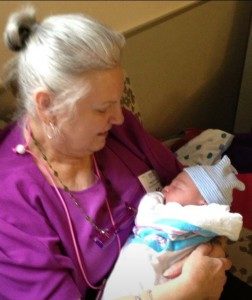
November 30, 2011, changed my mom’s life forever. That day, she had a massive, life-threatening stroke. On life support for three days, my dad, my brother, and I kept vigil by her bedside as doctors moved in and out running tests, changing tubes, and checking vitals. As they huddled and whispered, the looks on their faces gave away the grim possibilities they believed lay ahead. The first day, one of the doctors met with Dad, Chad, and me, to have the dreaded conversation that you never want to have about a loved one. Especially your own mother. If things didn’t get better, and it wasn’t looking like they would, would we have to make that final decision for her? Minutes, hours, and days passed and we began to see small improvement and it gave us all hope. She came out of unconsciousness and off life-support. Hurray! But what did this mean? What would life look like for her? For us? Would she be paralyzed, unable to speak, unable to function independently as she always had?
Archives: Client Stories
Client Story news and reviews
“He’ll never sing again”… or will he?
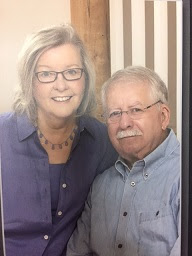
TAP client , Jackie M.
“He’ll never sing again.” On June 8, 2008, I uttered those words in the emergency room of a trauma center in Orlando, Florida. I was irrational. My faith was failing me. My husband had collapsed during the last day of a professional conference, having suffered a massive stroke that left him unconscious and paralyzed. He had been the most energetic kind of man—interested in everything, driven to do whatever he was doing to the hilt. Being the best—in his profession, piloting his boat, flying his airplane, riding his motorcycle, producing exquisite lathe-turned wooden pieces, and sharing all of this with everybody—these things made him the happiest. He had been an avid reader and a lover of music, particularly of singing tenor in our church choir.
Speaking for a Living… Meet Bob!
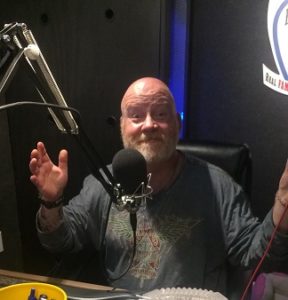
Lu Dumas, his wife, noticed Bob with bad headaches, fatigue, and an episode of what we now know was “speech arrest.” Your mind then starts to wander. What’s wrong with my strong, young, healthy husband? Maybe he’s working too much. That must be it, he’s just tired.
But an MRI changed our life forever that sunny day in April 2007. My 40-year-old husband was diagnosed with a grade 3 brain tumor in his left temporal lobe. Scary stuff. We had two little girls, we were happily married, and we had no idea what we were in store for. But we prayed and we had faith.
Cultivating and Creating Passion in the next generation of Speech Pathologists… Meet Lucy!
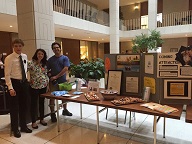
When I moved here to begin graduate school at UNC-Chapel Hill, I knew I wanted to work in a medical setting with adults who suffered from neurological trauma or disease. I felt blessed to move to an area that was bursting at the seams with major medical centers!
What I didn’t know, however, was that I had also moved right next door to a different kind of a center, a center where patients could move on to gain lifelong connections, friendships, and communicative support. Not long after I began my studies at Carolina, I heard about the Triangle Aphasia Project—a place that embraced the Life Participation Approach to Aphasia in an incredible way! I knew I had to wiggle my way in there somehow.
How sometimes HOPE is spelled T-A-P! Meet Roy G.
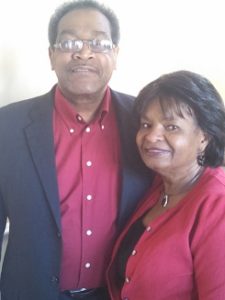
I was preparing for an event at church. My wife noticed that something was wrong. The first stroke occurred on September 21, 2014. The first hospital stay was 10 days. It was obvious that I still had problems and I had to return in a couple of days. Now my problems extended to my speech. The hospital staff began speech therapy. At the beginning of 2015, I could only put a mark to represent my signature. The staff at Wake Med Hospital alerted my wife to TAP.
It was not until my involvement with TAP that I could grasp the possibilities in approaching normal living again. The weekly group session provided me with interaction with others who are in varying states of recovery. It was clear that challenges were ahead for many of us. But the TAP staff provides weekly encouragement in an unintimidating, fun, and loving environment.
When Words Fail, Music Speaks… Meet Hugh!
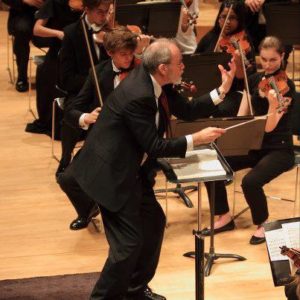
Margaret, my wife, and I were on a 2015 Lewis & Clark Cultural Tour traveling through Montana and Idaho following part of the trail of the early nineteenth century expedition. In Montana we canoed and camped on the Missouri River. In Idaho we did some strenuous hikes in order to visit Lewis and Clark trails and campsites in the Bitterroot Mountains.
After completing the Lewis & Clark Tour, Margaret and I had planned to spend a few days exploring Yellowstone National Park. We had been travelling since early morning and arrived at Yellowstone about 5:00 p.m. on July 24. After visiting Mammoth Terraces, I had a stroke in the parking lot. I remained conscious, so Margaret immediately drove me to the close by park village, where she located a ranger who called for paramedics. The lead paramedic recognized that my symptoms were very severe and immediately arranged to take me to the hospital in Bozeman, Montana, by ambulance and helicopter.
Day 12 – Building Confidence… a MUST in Aphasia Recovery!
~ Louis A.
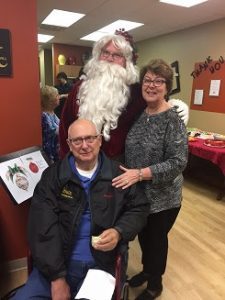
I hate when my phone rings before the alarm goes off because I know it is always going to be bad news. That was exactly what happened when we got the call around 4:30 am. My mom and Dad had just their sold their business of 43 years in September of 2015. They had aspirations to retire and relax but on December 27, 2015 my dad, Louis had a hemorrhagic stroke. The stroke left him paralyzed on the right side of his body. This has affected his ability to walk, use his right arm and his speech (aphasia).
He spent several days in the ICU at Rex. We sat by his bed wondering what would be next. Waiting and listening to the doctors did not give us much hope, but if you know Louis he his stubborn and doesn’t give up easily. He made enough improvements to move to the 3rd floor until he moved to Mayview. This is where the real journey began. He began working in physical, occupational and speech therapy. PT and OT were great he made small improvements. We were still at a point where he pointed a lot and became very frustrated with communication. As we got closer to being discharged his speech therapist said that we should look into the Triangle aphasia project (TAP).
Day 11 – Gifts for the Holidays…ones that keep on giving.
~ Abbe Simon.
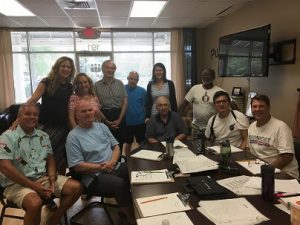
Friendship, God, Laughter, Physics, Photography. These are the words some of our TAP clients used to describe their “gifts” during this holiday season. These are the gifts they consider their own, not gifts to be given or to receive. Rather than think about exchanging or buying presents, our group thought about how lucky we are to have inner “gifts” to share with those around us.
TAP has been a gift to me. When I surround myself with people who, despite their aphasia, demonstrate understanding, compassion, patience, hope, and engagement I feel lucky. As a speech language pathologist with twenty years of experience, I continue to want nothing more than to provide support for people with aphasia and their families. TAP allows me to give my “gift” of helping others and at the same time, receive the gifts that each member and staff person gives. Each group at TAP, whether at our main Hub in Cary, or throughout the state, fosters an environment that promotes comfort, support, and opportunity. My three years at TAP has allowed me to form relationships that not only help the dynamic of each Aphasia Day, but make me want to provide the most appropriate and relevant support that each client deserves.
Day 10 – Partners in the Community…Bridge II Sports
~ Ashley Thomas, Founder and Director
TAP – What it means to me
T – Transform: make a thorough or dramatic change. Triangle Aphasia Project’s methods transforms lives, yes, the person who is effected, but also the community around that person. Our greater community is transformed through the loving, guided methods of recovery and care. A voice in darkness.
A – Advocate: a person who publicly changes policy. Triangle Aphasia Project’s ground breaking methodology is impacting the community of medical providers and audiologist using a holistic approach. Voices of Change.
P – Potential: having the capacity to develop into something in the future. The Triangle Aphasia sees what is not yet seen, and with their experience is able to breath hope and life into the heart. A voice is found.
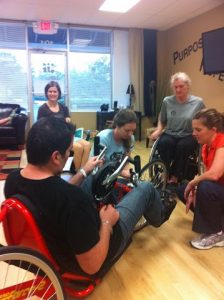
TAP has designed a successful model that is building life back to those lost their voice through injury. I value their methods and love partnering with them through adapted sports!
Day 9 – Remaining a part of the TAP family…in a big way!
~ Ron Ottavio.
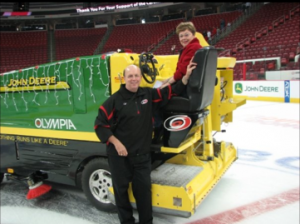
I had never heard the word “Aphasia” until 2005 when my wife, Debbie Ottavio, was diagnosed with this neurodegenerative disease. Primary Progressive Aphasia (PPA) is normally a by-product of frontotemporal degeneration (FTD). Aphasia can, more commonly, strike individuals as the result of a stroke or a traumatic brain injury. PPA is very different as it slowly impacts the individual over time and continues to intensify.
In early 2004 at the age of fifty, we began to see Debbie’s inability to think of a word as she was in the normal course of conversation. Initially, we laughed it off, and Debbie attributed it to menopause and then to female replacement therapy. After several visits to neurologists in Raleigh, UNC, Duke, we finally received the diagnosis at John Hopkins in late 2005. Many tests were done to rule out other diseases like ALS, Alzheimers, MS and several others. Once diagnosed and understanding PPA, we focused on dealing with this crippling disorder. Debbie was of strong faith, and when talking with her Aunt one day, Debbie said, “You know – God must have a plan for me and I’m just going to go along with it.” You see – that was my wife – strong in her faith, strong in spirit, and strong in living every day to the fullest.
Day 8 – A new community…
~ Ken T.
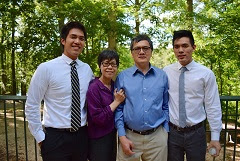
My husband, Ken, suffered a massive hemorrhagic stroke on 11/24/2014. He stayed in the ICU for a month in a coma. He woke up on 12/24/14. During his stay in the ICU, the doctor tried to tell me to give up, but, I knew that our Heavenly Father was in control, not the doctor. A few days after he woke up, he went to Duke Rehab Institute (part of Duke Regional Hospital) for a month of rehab both physical and speech, because his stroke also affected his language area, and he had aphasia. When he went home on 2/9/2015, he was on a wheel chair and did not talk much.
Before his stroke, Ken was very out-going, loved to interact with people, serving in our church, our Bible study, getting together with our sons and their friends over dinner and talked to them about life, God, and anything they wanted to talk about. After the stroke, with hemiparesis and aphasia, his life was totally different from before. He could not do a lot of things that he loved to do.
We went to TAP in the summer of 2015. At TAP, Ken not only received speech therapy, more importantly, he found friends that he could relate to. Every time at TAP, Ken is laughing, joking, singing, talking and having fun with his friends while working on his speech at the same time. He started to look forward to go to TAP. Through TAP, we also made some friends that we go out to eat some times. To Ken, TAP is a very important part of his life.
Day 7 – Merry Christymas!!

~ Christy E.
We don’t walk around in thunderstorms. Our oldest son, West was diagnosed with Leukemia in December of 2004. Six months later we got confirmation that he was on the Autism Spectrum. Two weeks after my 44th birthday, I had a heart attack. On Halloween 2015, my wife Christy, at 44 years of age, suffered a hemorrhagic stroke.
We have been fortunate in our bad luck. West’s Leukemia, ALL, was 95% survivable. He is high functioning enough, on the autism spectrum, to attend regular school. My heart attack was due to an inherited trait, easily treated with medication. Christy survived her stroke, only just, and has made miraculous strides in her recovery. We expect to have her final surgery sometime early 2017, and she can focus all her energy on recovering use of her right side.
Thanks to TAP, communication is something that has come back faster and better than anything else. While she is restricted in her physical activities, she has been dedicated to working on her aphasia. TAP has allowed her to work on her recovery, and see the gains she is so anxious to achieve. While not everyone could eliminate speech therapy, as we have, attending TAP has shown greater improvement over time than anything else. I believe, the facilitated interaction with other stroke victims, has shown Christy that while the improvements come slowly, they do continue to come, if you are dedicated to the work. TAP has provided the environment and expertise to allow her to not just improve, but thrive.