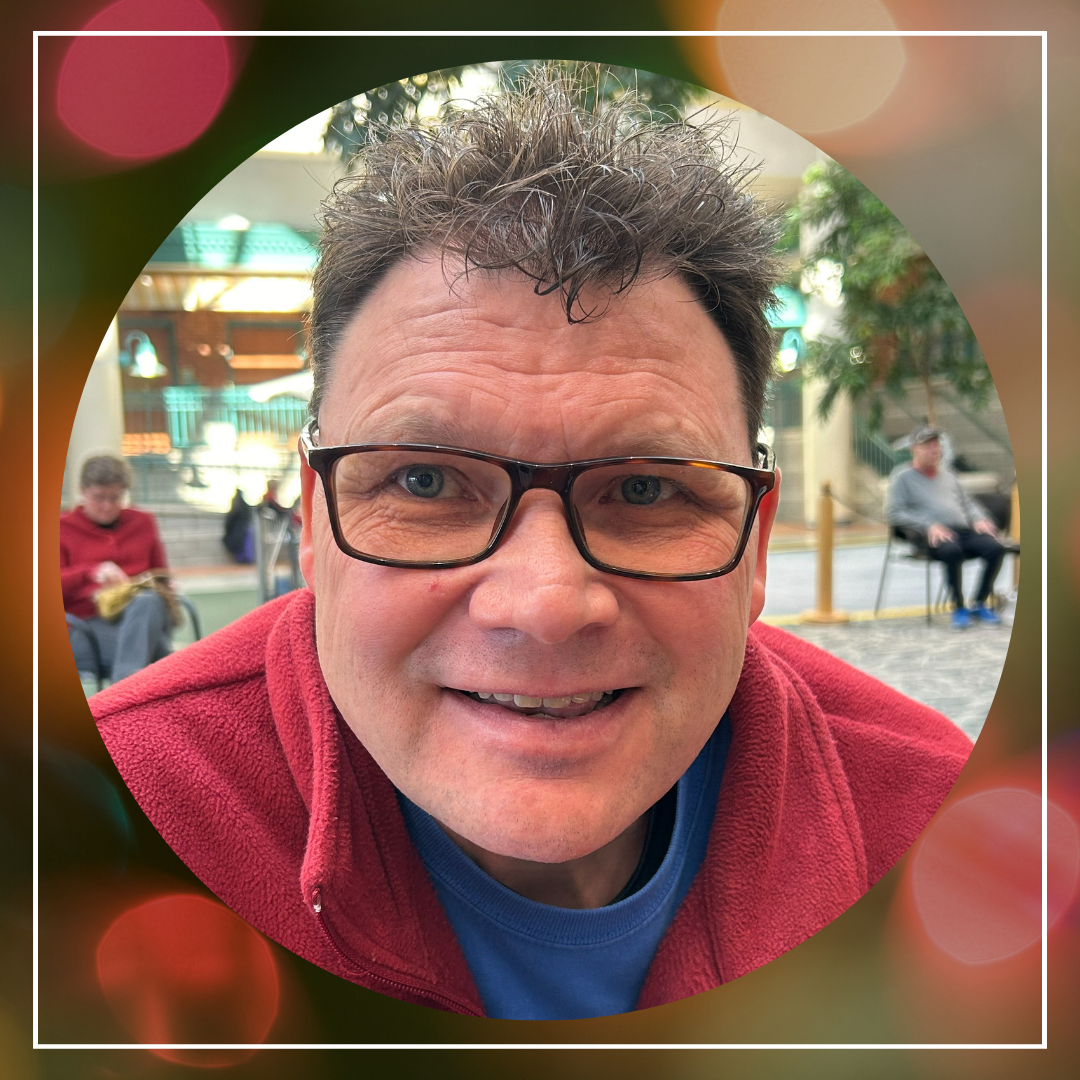
Fredy’s Story
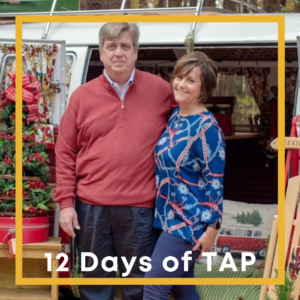
From the TAP Home Office: Join us in welcoming our first Spanish language 12 Days of TAP story from Fredy. You can find the English translation of the interview below.
Hola Buenas Noches.
Cual es tu nombre? Fredy 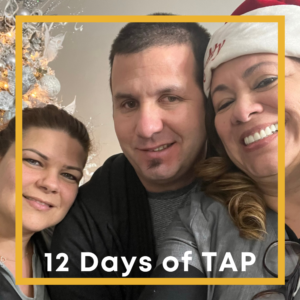
Como se llama tu esposa? Gretis
Cuantos hijos tienen? 2 hijos; Valerie y Diego
De que te sientes agradecido?
Agradezco mucho por estar vivo, por poder compartir con mi familia, por poder comunicarme, y por caminar.
Gretis nos puede contar un poco la historia de Fredy?
Fredy tuvo un ccidente de carro el ano pasado que le causo graves danos, especialmente dano cerebral,
O lesion cerebral traumatica.
El ha mejorado tremendamente con las terapias y yo se que seguira mejorando. Estuvo 3 meses hospitalizado de los cuales 1 mes fue en un coma. Le operaron del cerebro y mientras en el hospital sufrio un accidente cerebro vascular (ACV). Luego le diagnosticaron con el problema del habla y comunicacion que se llama Afasia por lo cual no se puede expresar con palabras. Poco a poco fue mejorando y le dieron de alta a la casa. El recibio muchas terapias mientras estuvo en el hospital y despues en la casa. Cuando llego a la casa no podia caminar, no recordaba casi nada, y no podia hablar. El ha mejorado tanto que ya tiene la memoria perfectamente y hasta major que la mia. Ya puede caminar y se mueve independiente con el apoyo de un baston. Ya el hace cosas por si solo. Al principio, le tuvimos que habilitar un dormitorio abajo por que no podia subir las escaleras. Ya hoy en dia sube y baja las escaleras. El no podia identificar objetos ni seguir direcciones y ya lo hace perfectamente. Lo que no ha recuperado es el habla pero lo entiende todo. Tambien ya dice muchas palabras y algunas frases cortas que le salen espontaneas. Ya el puede responder con si y no cuando se le hace preguntas.
Que crees que le ha ayudado a Fredy? Alguna organizacion o programa?
Yo no me puedo quejar por toda la atencion que recibio Fredy desde su accidente. Primero debo agradecer al hospital, a los doctores que lo atendieron y los especialistas y terapeutas que en aquel momento le ayudaron y que aunque Fredy no podia hacer mucho en el hospitalpor su estaado tan delicado le dieron las bases para la rehabilitacion. Cuando llegamos a la casa le dieron terapias todos los dias especialmente la fisica y del habla. Estamos muy agradecidos con el programa de ustedes (TAP) que nos ha ayudado tremendamente en este largo proceso de recuperacion.
Que nos puedes decir de nuestro programa (TAP) Triangle Aphasia Project?
Yo pienso que es muy bueno, me gustaria que creciera mas, y que se conociera mas, ya que es el unico sitio para que personas como Fredy puedan interactuar y socializar. Yo se que hay muchas personas con el problema de Fredy, yo vi muchos en el hospital cuando iba a las terapias pero no conocen el programa. Seria muy bueno que ellos se reunieran para que uno al otro se motive y que entiendan que hay otras personas como ellos. Pienso que el programa no se conoce bien y seria excelente darlo a conocer y que las personas con problemas de la comunicacion tengan un punto de reunion. Nos paso con Gabriel, por ejemplo, que los conocimos a traves del grupo y ya el vino un dia a la casa con su esposa y pasamos una linda tarde. Yo pienso, que es muy beneficioso ya que ellos aprenden uno del otro.
Fredy a quien tendrias que darle las gracias por tu progreso?
Primeramente a Gretys, mi esposa, a mi por mi esfuerzo y ganas de recuperarme
Y luego?
A ti, Graciela y al programa TAP por toda la ayuda y el apoyo que nos ha brindado.
Muchas gracias por compartir tu historia y en nombre de TAP les deseamos que tengan unas Felices Pascuas y un Propero ano nuevo 2023!
In English,
FREDY’S STORY
Hello and Good Evening,
What’s your name? Fredy
What’s your wife’s name? Gretis
How many children do you have? 2 children; Valerie and Diego
What are you grateful for?
I am very grateful for being alive, for being able to share with my family, for being able to communicate, and for walking.
Gretis, can you tell us a little about Fredy’s story?
Fredy was in a car accident about a year ago that caused serious injuries, especially brain damage, or traumatic brain injury. He was hospitalized for 3 months, of which 1 month was in a coma. He underwent surgery on his brain and while in the hospital he suffered a cerebrovascular accident (CVA). Then, he was diagnosed with a speech and communication problem called Aphasia, which is why he cannot express himself in words. Little by little he was improving, and they discharged him to the house. He received many therapies while he was in the hospital and later at home. When he got home, he couldn’t walk, he didn’t remember almost anything, and he couldn’t walk. He has improved so much that I can tell he already has a perfect memory and even better than mine. He can now walk and move independently around the house with the support of a cane. He already does things by himself such as bathing himself and he helps a little in the kitchen. When we first got home from the hospital, we had to make sort of a bedroom downstairs because he couldn’t go up the stairs. Nowadays, he goes up and down the stairs as he wishes. He couldn’t identify objects or follow directions and now he does it perfectly. What he has not recovered is his speech, but he understands everything. He says many words and some short phrases that come out spontaneously. He can already answer with yes and no questions when asked. He has improved tremendously with the therapies, and I know he will continue to improve.
What do you think helped Fredy to recover so fast? Any organization or program?
I can’t complain about all the attention Fredy has received since his accident. First, I must thank the hospital, the doctors who treated him and the specialists and therapists who helped him at that time and, although Fredy couldn’t do much in the hospital due to his delicate condition, they gave him the basis for his rehabilitation. When we got home, he received therapy every day, especially physical and speech therapy. We are very grateful to your program (TAP) that has helped us tremendously in this long recovery process.
What can you tell us about our program (TAP) Triangle Aphasia Project?
I think it’s very good, I would like it to grow more with more participants and more classes in Spanish. I think people don’t know about enough. TAP has been the only place where people like Fredy can interact and socialize. I know that there are many people with communication problems, like Fredy. They just don’t know where to go. I saw many in the hospital when I was taking Fredy to therapy but they don’t know the program. It would be great if more people with aphasia get together so that they could motivate each other and understand that there are other people like them. I think that the program is not well known, and it would be a great idea to make it known in the community and that people with communication problems have a meeting place. For example, we met Gabriel and his wife, we met them through the Spanish group at TAP, they came to the house one day, we spent a nice afternoon together, they laughed, they ate and they learned from each other. I think these meetings are very beneficial to increase motivation, socialization and communication for people with aphasia.
Fredy who should you thank for your progress?
First, to Gretis, my wife, to me for my effort and desire to recover and to all my therapists but especially to you, Graciela, and to the TAP program for all the help and support you have given us.
Thank you very much for sharing your story and on behalf of TAP we wish you a very Merry Christmas and a prosperous New Year 2023!
 The Aphasia Project (Triangle Aphasia Project Unlimited)
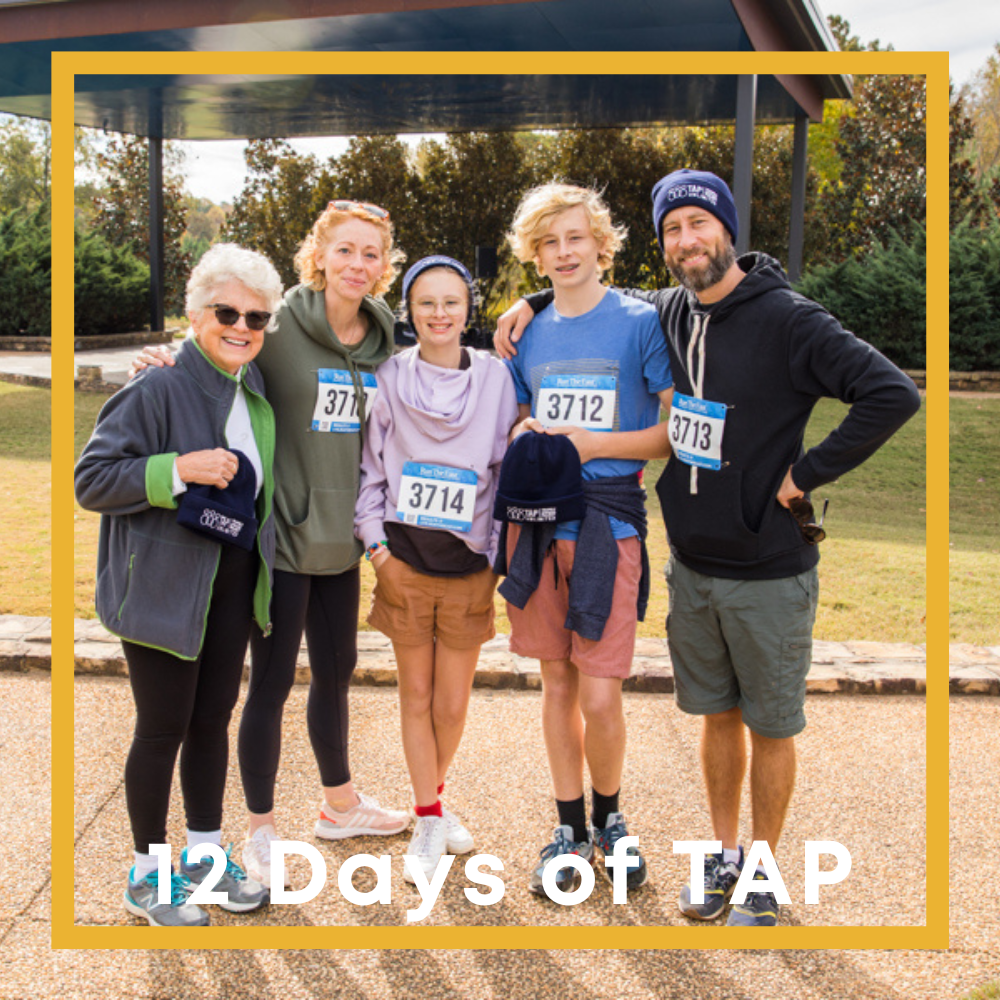
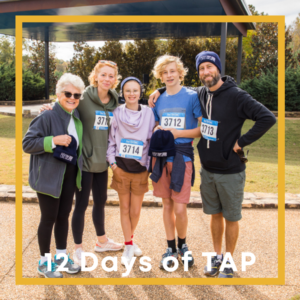
 Well, that lady is still here with PPA doing all the things, gardening and working in her yard every chance she can get. She now has NEW commitments to add to her already very packed calendar…TAP group meetings!!! Once finally diagnosed, as a next step, her Dr suggested she get in touch with Triangle Aphasia Project and start speech therapy. Again, she didn’t skip a beat and contacted Maura. Instantly there was relief. Not only did we get help and answers as to what was happening with her, but there is also help for family and friends. As soon as we could, my husband and I took the class How to Speak Aphasia. Maura helped us find her a speech therapist and get set up with the zoom meetings. Life would be so different if we didn’t find TAP, or it didn’t exist, I can’t even imagine. So grateful I have my mom here in Raleigh with me where there is a place like TAP and we could go through this together. Moms schedule has slightly changed, she just turned 76 and had to recently adjust the intensity and where she works out because of balance issues from the PPA. Not to worry, she has incorporated a new workout routine, one for speech, reading and writing to keep those parts of the brain strong and working together. Some days she even works out twice a day with TAP zoom meetings! She can be found attending Book Club, Writing, several Conversation groups, TED Talks, and when it’s warm again you can bet she will do TAP Garden Group.
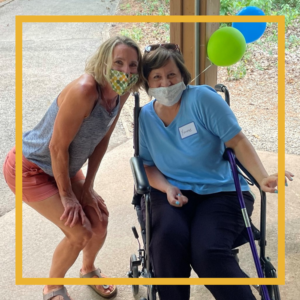 There are a lot of groups in TAP that you can join. Something for everyone, no matter where your interest lies. To be around people who have had a stroke or a brain injury when you are going through the same thing is something I can’t describe. People know what you’re going through and it’s OK. We learn a lot through Maura, the other group facilitators, and each other.