Events Calendar

12 Days of Tap 2019: Day 8

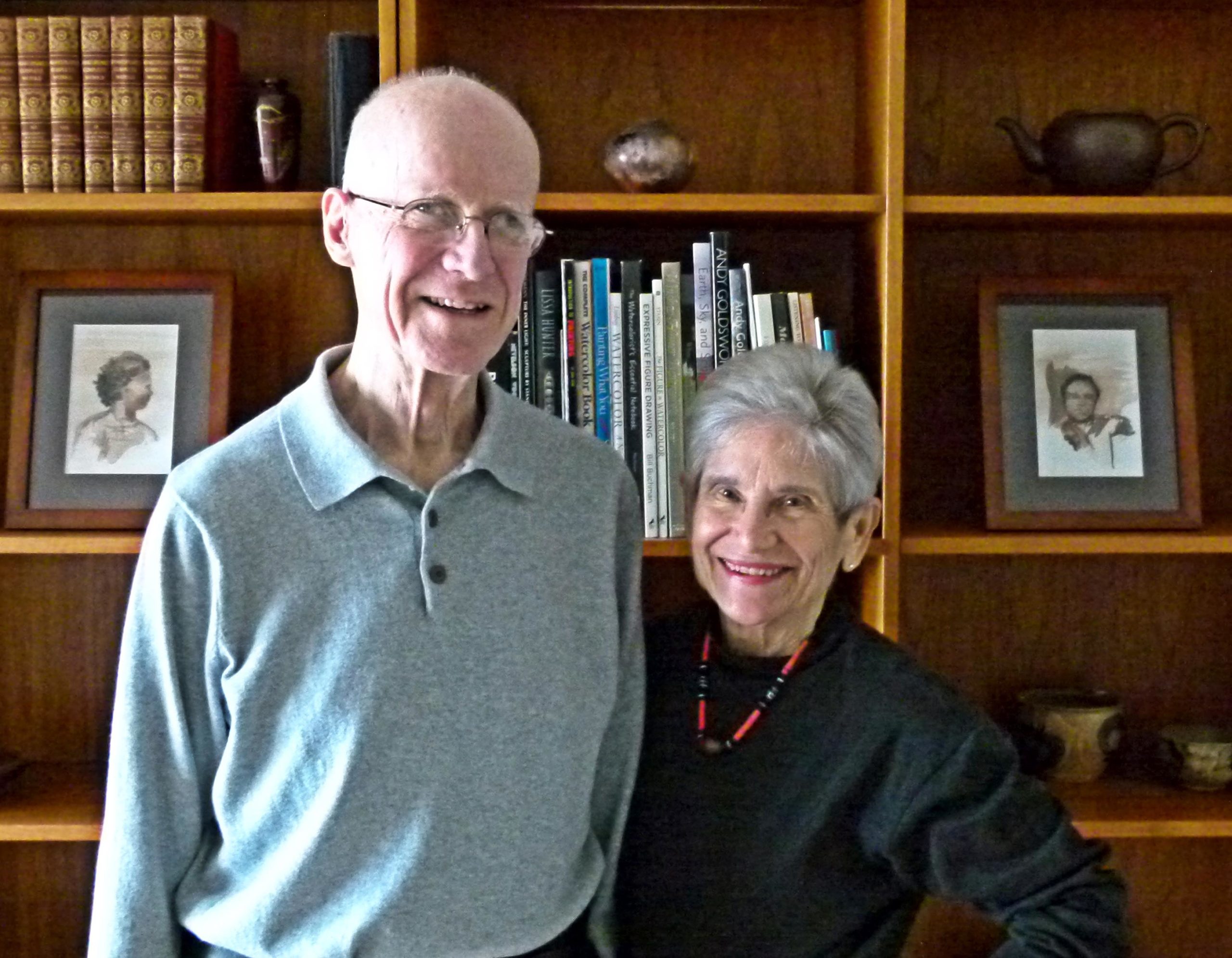
Storytelling Royalty

– Ken and Beth Corsbie –

From Ken:

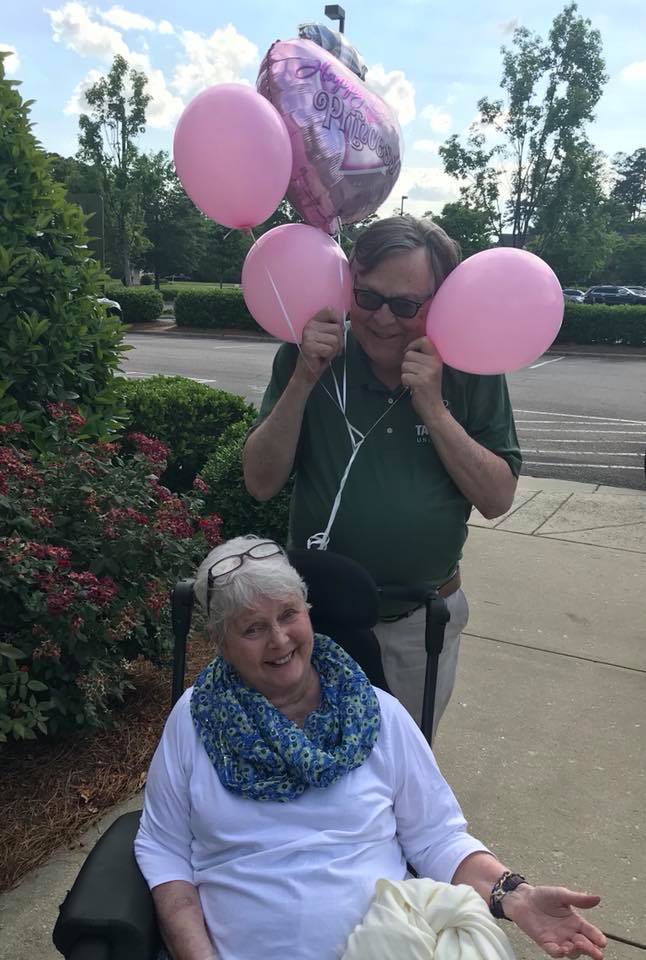
When I first received an invitation to the annual “Gimistory” storytelling festival in the Cayman Islands, I didn’t want to go and I told TAP that I didn’t want to go. I had told stories there 21 times and I didn’t want to go and not be able to perform the way I did before. Peter, one of the group members, said he would treat it as an opportunity to tell people about aphasia and it stuck in my brain. I thought, well, I can do it for TAP. I was concerned about the physical aspects of travel, but I was assured that the airlines would help with the wheelchair. I was still afraid of travel. 

I didn’t want to go but decided I would go and show them. People might have never heard of aphasia and I could introduce it to them. My wife agreed to help introduce me. My friend Henry, the Director of the Cayman National Culture Foundation, had said all along that I need not tell. Henry and I had worked together in the 1970’s and travelled throughout the West Indies performing Caribbean poetry.  I chose 6 or seven poems to work on if I did decide to tell.  

I was pleased that my fellow storytellers and the audiences treated me like royalty. These international tellers kept encouraging me. One of the tellers has a son with aphasia and she spoke about how I inspired her. 

When we decided to go, my wife quickly arranged travel. We were so impressed by the assistance that the airlines provided with the wheelchair, meeting every flight and providing help with connections, and to the front of the line for customs. With the amount of people with stroke, it is important to know that wonderful assistance is provided. This was one of the things that was holding me back from travel. Having gotten the wheelchair, we were met by the director of CNCF. 
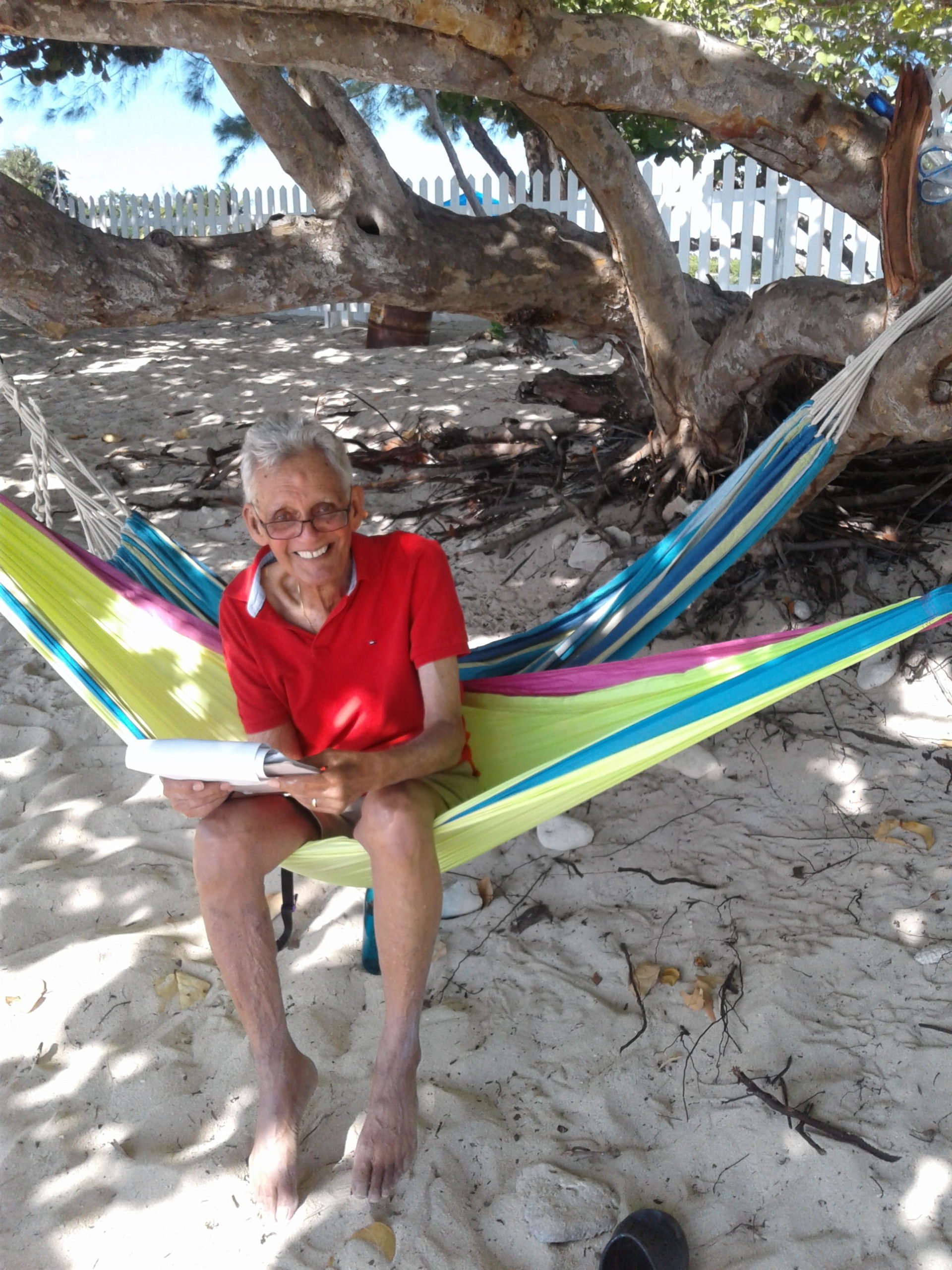
The first night we went to a review type play that a version has been going on for about 25 years. We stayed at a good friend. The next night we went to a party at the home of a good friend and that is when I was permitted my first performance. This was very softly, I was so nervous about performing, but here at the end of it, the audience gave me a great response. This was probably the first time they were hearing someone with aphasia. I knew then that I would try to tell every night of the festival.  For the next two nights, I tried but was nervous. The audience gave tremendous and spontaneous applause. There was improvement all of the time. Everyday I got an hour or two of rehearsal in locations such as the beach that we went to everyday.  
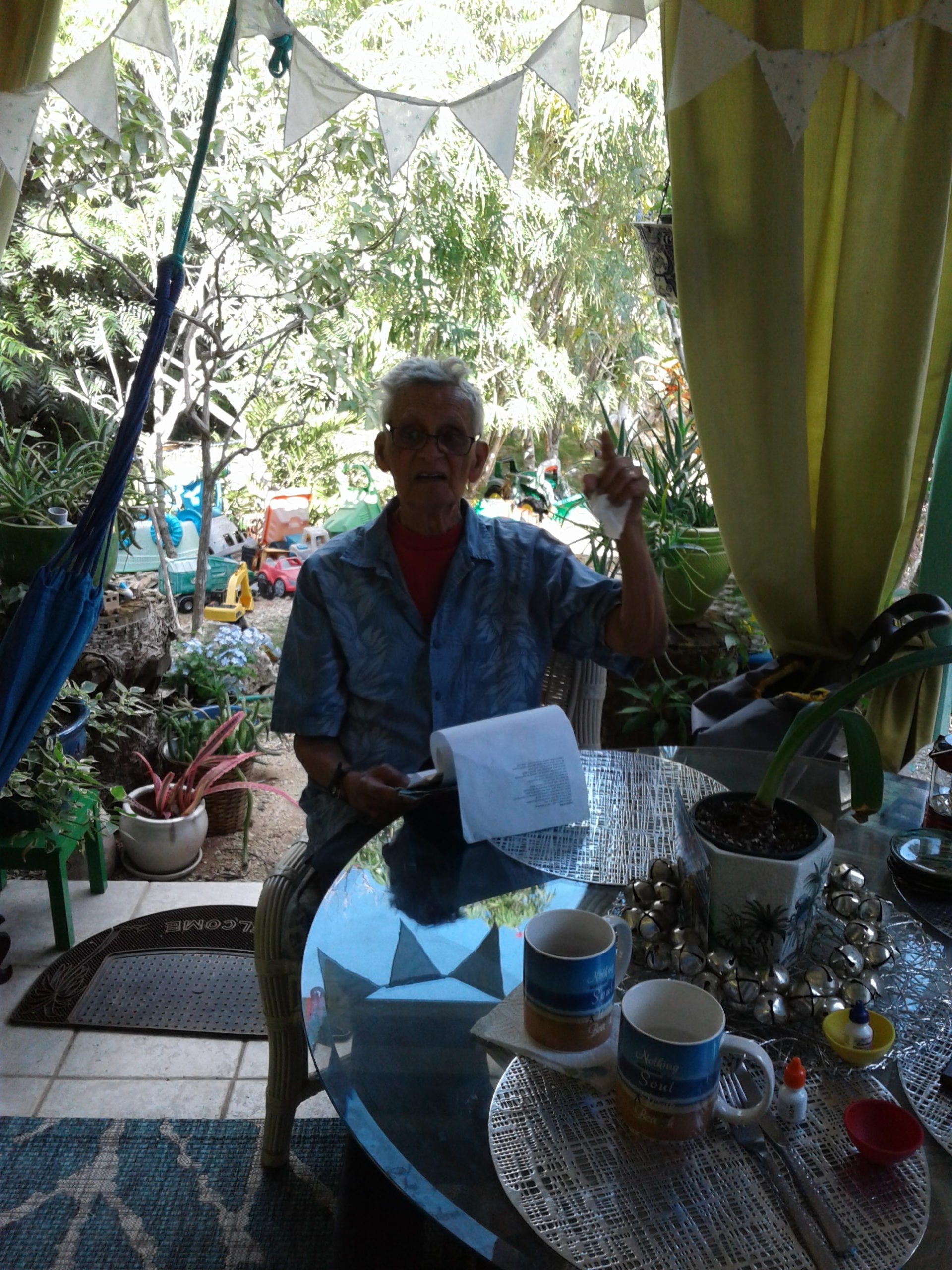
From day one down to the end, and all the while we were there, there was improvement all of the time. Why I went there was because of TAP and the encouragement of my colleagues.   

From Beth:

Despite the daily struggles involved in living with a loved one who has had a stroke, probably the main thing that brings tears to the eyes of a spouse is the knowledge that close friends and new acquaintances don’t “see” the person beyond the disability, but rather look away to avoid discomfort with difficult communication and often avoid the stroke survivor altogether. In addition to the “Speaking Aphasia” programs offered by TAP, the affirmation of self through social interaction is an important part of the support TAP groups provide. I have observed the highly skilled SLPs engage members and observed group members support one another through their communication challenges. The community of support provide by TAP has been important for Ken and me as we continue this journey together. TAP provides an opportunity for family members to sit with one another. When we look into each other’s eyes, we know that they know about the everyday ups and downs in supporting a family member with aphasia. 

Ken is a dramatist, storyteller and poetry performer well known throughout the English-speaking Caribbean. His career has been formed by creative and clever uses of language. His stroke in May 2018 has required him to relearn to speak as well as to find new ways to communicate. And yes, that course in mime in drama school does have a purpose. Ken has been encouraged by TAP to continue working on speaking and communicating. He looks forward to the groups he attends, and the encouragement provided by his fellow TAP members and SLPs. 

With the encouragement of TAP friends, Ken and I went to the Cayman Islands “Gimistory” storytelling festival. Ken helped instigate the festival, some 22 years ago and has been a featured teller at all of the festivals. When the director of the Cayman Island Culture Foundation and longtime friend called to invite Ken to Gimistory for 2019, he said Ken would not be required to tell unless he felt up to it, he could just be there and be venerable. We debated about going and declined the invitation thinking that the travel would be too difficult, and it would be better to have Cayman remember him for his previous performances.  

At the last minute we decided to go. We discussed the importance of making people aware of aphasia and the possibility of performing some short Caribbean poems that Ken had been working on and had performed for his TAP groups. Ken was determined to perform at Gimistory and worked several hours each day in preparation. At the first performance, Ken performed a poem with a longtime friend and calypsonian. His courage and dogged determination brought his close friends to tears. He was among Caribbean artists who love him and revere his contributions to Caribbean theatre and culture. The week of Gimistory was a celebration of life with aphasia as well as transformation and improvement through dogged determination, hard work and no fear.  

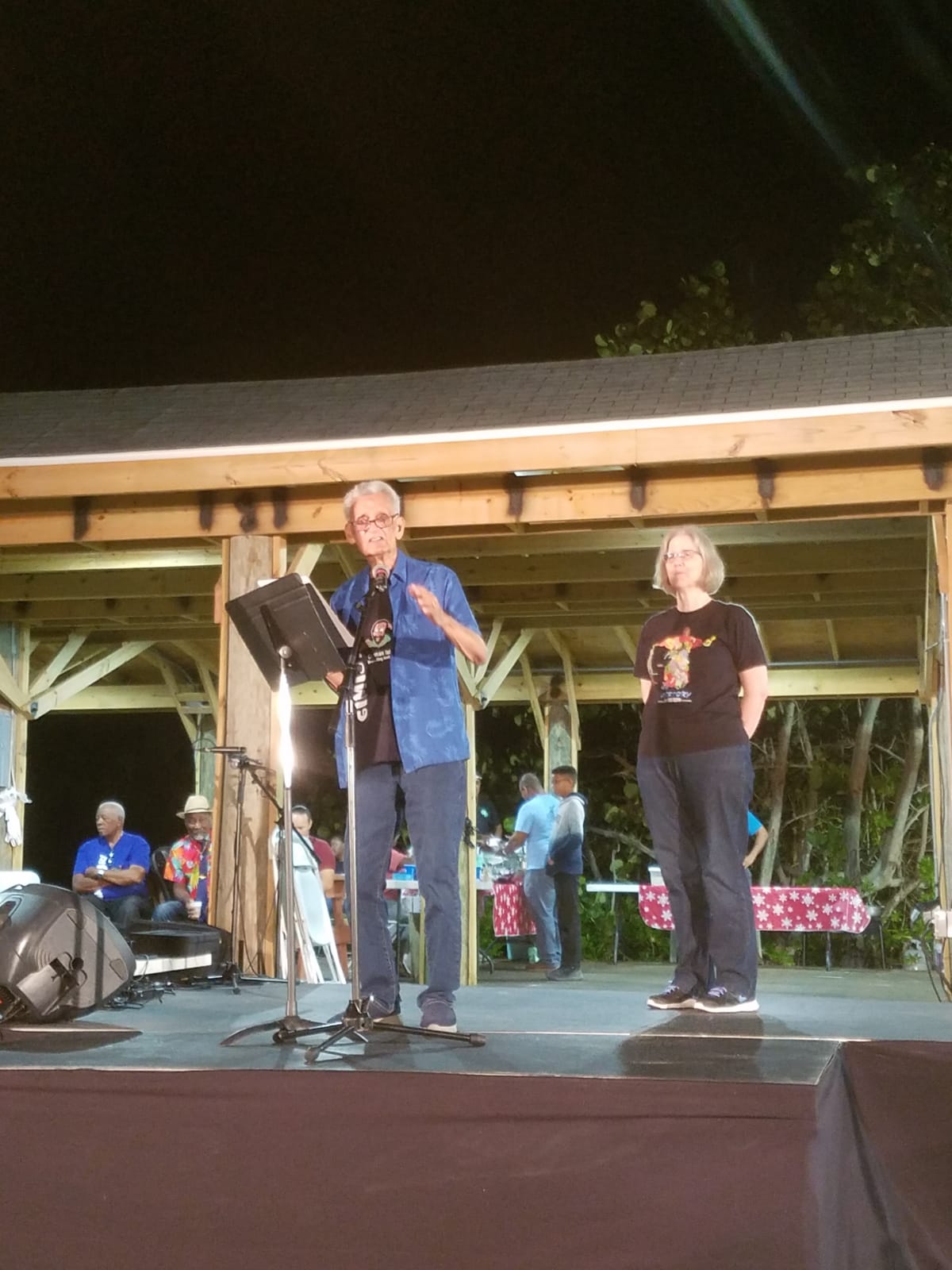
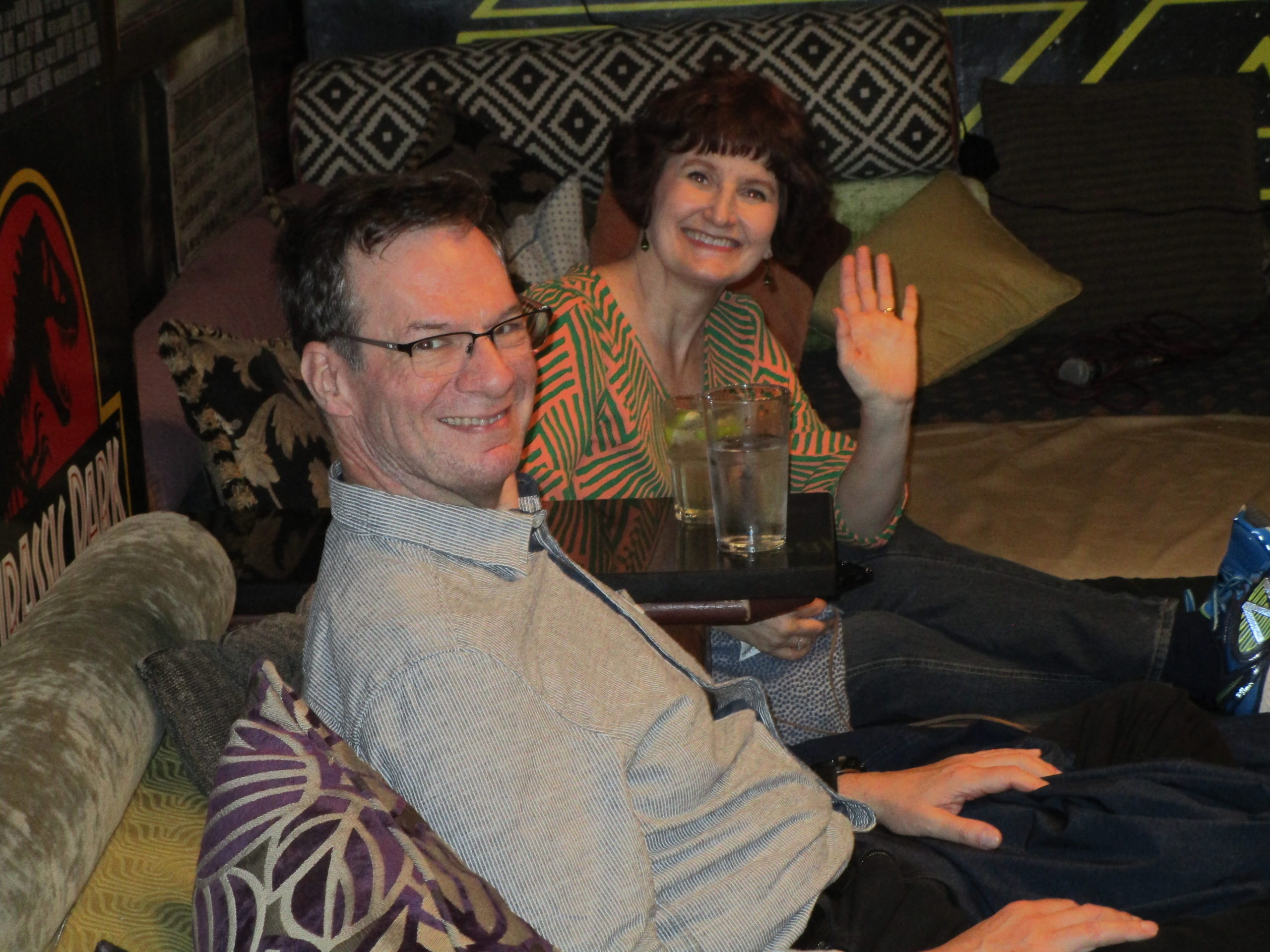
At each of the performances, I walked with Ken on stage and prepared the audience with “Ken and I have been coming to Gimistory for more than 20 years. Many of you have grown up hearing Ken tell stories at Gimistory every year. In May 2018, Ken had a stroke. How many of you know someone who has had a stroke? [Nearly everyone in the audience raised their hand.] You may know that sometimes stroke affects language, but not intellect. This is called aphasia. Ken has aphasia so he has had to learn to speak, read and write again.  So he will be using a script tonight. Ken wants to share some of his favorite poems from some of his favorite poets and friends.” Ken was embraced as “Caribbean theatre royalty” and in addition to a warm response from the audience received accolades from longtime friends and well-known Caribbean artists who know and “see” Ken.  

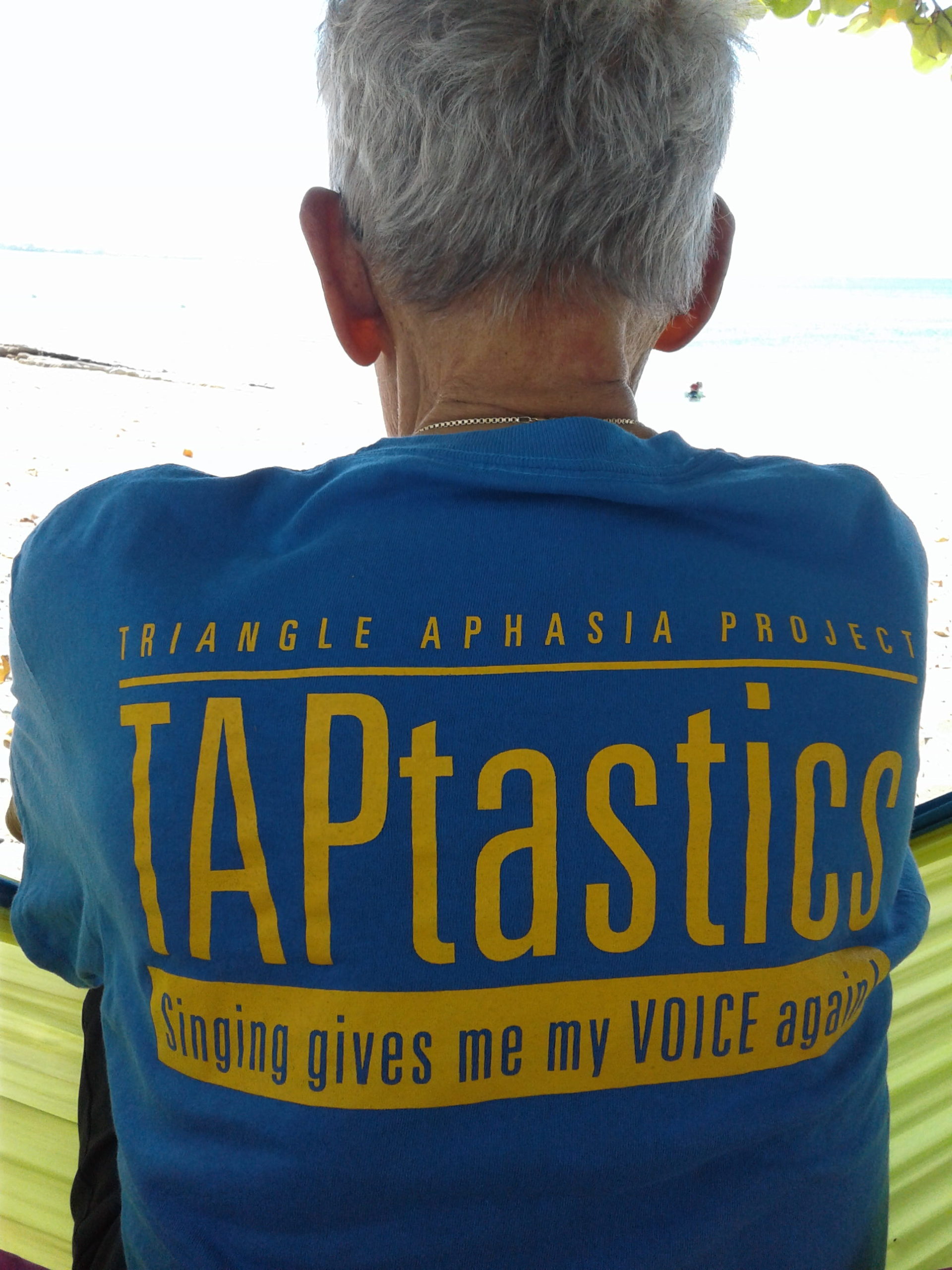
Throughout the trip to Cayman, we were thinking of TAP and anxious to share our experience with the group who has been so supportive an encouraging. On the final performance, Ken wore his TapTastics t-shirt in tribute to the group that has walked with us on this journey. 

We are grateful for TAP and the resources provided to our community of stroke survivors, their families and friends. TAP is a special and important resource and we celebrate the incredible and unique work that TAP continues to do. 


From the TAP Home Office:

Beth and Ken were the first 2019 nominees to say an emphatic “YES” when we asked them if they would share their aphasia story for this year’s 12 Days of TAP.  They would need to wait, however, as they were in the Caribbean at a StoryTeller’s event that…well, I won’t steal their thunder.  Read the story and hear how this legend made a remarkable return worth every accolade he earned! Further, hear how a care partner, a wife, learns to encourage, support and gently nudge in the pursuit of all goals. 

Thank you, Beth and Ken, for this story, these pictures and the video that brings us right along with you!  We are so grateful for your generosity.
12 Days of Tap 2019: Day 7

I Have a Village

– Written by Tonya Flowers –

My name is Tonya  Flowers,  I have a nurse I have several strokes.  I am currently going to school at NCCU  For strokes. While in Instructors   information  regarding TAP. 

  I have been with TAP    For about About 2 and a 1/2 years. Tap has been a   Very instrumental in my life. 

I have a village,  My husband,  Immediate family, and TAP family. 

 It was very  Difficult to adjust   Leaving the job that you love and I financial responsibility put all my husband. I depression set in.  

 The  The very 1st time that I went to Tap  It was a blessing. I love the fact that we are able to Tap is a special family we help each other  What reading, writing 

pronunciation,  And current  new.   Me the most imparted important part is Fellowship  with all different backgrounds. 


From the TAP Home Office:

Sometimes you meet someone with aphasia who so desperately wants you to know that they know… they do everything they can to try to explain to you that they are still completely there, but just experience challenges in the expression of those ideas/thoughts/memories, etc.  At TAP and amongst our TAP family, it’s not necessary.  We see beyond the language struggle and are here to help you unmask your competency and reveal your potential. 

Today’s story is written by Tonya.  A nurse whose stroke derailed her career, but not her passion for nurturing!  Initially shy, Tonya has really come out of her shell in the last few years! She is always a bright light in group, encouraging of others, and great at using her strategies. She has volunteered to talk to PA students about what it is like to receive medical care after having a stroke from the perspective of a nurse, which is so unique. We look forward to her enthusiasm in group and her support for her fellow group members. 

Thank you, Tonya, for sharing your journey with us.  We love you!!

12 Days of Tap 2019: Day 5

When We Connect, We Learn

– Katherine Mansfield –

At the beginning of 2019, prior to my first experience at TAP, I had never spoken to anyone with aphasia. In my speech-language pathology undergraduate courses, I had researched some of the different types of aphasia, but I had never had any personal experiences with individuals who have this communication disorder. 

During my first experience as a volunteer and student observer at TAP, I had the pleasure of observing the TAP Challenge Group with James, Tom, Don, Austin, and many more of my future TAP friends. Christine, the group leader, helped me better understand what aphasia really means and does not mean for these individuals as she educated the clients, their families, and observers of the group about how to use communication supports and led conversations to help improve the clients’ communication skills. 

Throughout my 11 months as a volunteer at TAP, I have come to understand that aphasia and communication disorders are more than meets the eye. Each of these disorders require individuals to connect and engage with one another in order to treat them. When we connect, we learn, and this connection piece is at TAP’s core. TAP believes in connecting individuals, their families, and the community with each other and the appropriate education and skills to help individuals with aphasia regain their communication skills. I can personally speak to TAP’s outstanding initiative and commitment to change the narrative of what aphasia is and is not, and to create a positive, long-lasting impact on the lives of everyone it affects. 


From the TAP Home Office:

One of the greatest things about being in this area of the Triangle is the connection we have with the Universities!  We are blessed to share our program with students from all areas of health and human services, from speech pathology to rehabilitation counseling to marketing/communication studies. The young men and women who volunteer often are learning about aphasia for the very first time, and watching their transformation is incredible. 

Katherine joined TAP as a volunteer, and was instantly loved by the clients, their families and the group leaders.  She demonstrates a caring and open communication style, and is receptive to all of the strategies people with aphasia need.  She has been invaluable on every project TAP has on its to do list, and has even helped us obtain new and exciting collaborations in the community.  Thank you Katherine, for sharing your time, talent and passion with us.

12 Days of Tap 2019: Day 4

A Decade of Determination

– Joan English  –

From Maura English Silverman:

As Founder and Executive Director of TAP Unlimited, the honor of sharing these 12 Days of TAP stories fills my heart with faith in the need for our services, and gratefulness for the community who allows it to continue to thrive.  When individuals learn of the fact that my own mother has suffered a stroke and lives with aphasia, they often say “Oh, so that is why you started the program, right?” or “Oh, she’s lucky to have a speech therapist in the family” (she actually has two!)…but here’s the truth.  My mom was TAP’s biggest fan. Having started the organization the year my dad passed away, it provided her another place to give of her passion, her time and love.  She volunteered at events, shared every small achievement and encouraged me a million times when I felt frustrated by the challenges of running a nonprofit.   

Until the cold winter Thursday afternoon when everything changed.  As my son, Austin, said so well, “TAP was always something that I just saw as my Mom’s job, until ten years ago when my grandmother became one of their patients. I was, from there on, dedicated to my Grandma and TAP on a personal level.”  It’s analogous to the cobbler with the broken shoes.  I know how to help others and their families…but how do I do this?  How do I practice what I preach?  How do I believe in a Life Participation Approach to Aphasia when that Aphasia was in my own backyard?   

Joan English

Well…I leaned in.  I leaned into my family, my friends, my colleagues and my “second family”, TAP.  We faced this life altering curveball with the tenacity we’d had as a model all our lives.  And today, 10 years to the day of my mom’s stroke, we are still standing…. Oh, don’t get me wrong…we stumble.  But we lean in again and gain support.  We hope, as a family, that our experiences give you strength and faith in what we created in TAP.   

Austin once again summed up my mom’s journey with the wish we have for each of you: “TAP has provided her with the opportunity to regain her strength and build relationships with individuals with similar experiences.”


Once upon a time…it’s how all good stories begin, right?  Of course they do…and then they all end up with “happily ever after.”  Unless you are human, that is.  Because every story, every life, has triumphs and tragedy, celebrations and struggles, and the totality of the story results in a legacy that is unpredictable from the turn of the very first page.   

Joan English has always been, from my perspective, a combination of Florence Nightingale, Mother Teresa and perhaps Joan of Arc.  Big shoes to fill, I understand, but ask anyone who knows her and they will validate the many reasons why I saw her this way throughout my formative years.  She was, after all, born to serve others, nurse anyone and everyone who needed compassionate care and sacrifice without consideration of the impact on her own self.  She has also always been a prophetic and skilled writer…one who could invoke passion, self-reflection, and yes, even a little guilt, with her lengthy prose in the form of stories, journals and parental feedback letters! (If she ever gave up her career in nursing, I’m certain Hallmark would have opened a position for her in a heartbeat.)  As a Registered Nurse, she worked tirelessly in every position to ensure that her patients received everything they needed, even if they didn’t realize they needed it yet.  Her nursing nature continued beyond her retirement, as she would swoop in to save the day with relatives, friends and complete strangers with her gentle, reassuring voice and touch.   

Joan English

And en route to provide this innate nursing care to her family on 12/17/2009, Joan suffered a massive left hemorrhagic stroke.  A PA State Trooper saved her life on I-81, and she began what would be a long and arduous journey, at Hershey Medical Center in the Neuro-Intensive Care Unit.  The continuum of care from acute rehabilitation, day treatment, outpatient therapy and involvement in TAP was all too familiar for me…almost routine.  Except that this was my mom.   

And the new perspective I gained from watching family members and her friends, medical providers, etc. navigate this journey altered the dream of what TAP was, and what it needed to become.  You see, since its inception, TAP had focused on individuals with aphasia…provision of ongoing programming that challenged the traditional therapy model and allowed individuals challenging, engaging and hopeful travel along this rehabilitation journey.  But what about the children and grandchildren? The out-of-state friends? EMS workers who came to rescue her from a seizure or a fall?  How were we assuring that the family, friends and community were well equipped with the tools to help a person with aphasia live successfully with aphasia?   

Our metamorphosis from Triangle Aphasia Project to Triangle Aphasia Project Unlimited was the result of another completely selfless gift from the woman who taught me everything I know about being a good person, a caring provider and a determined agent of change.  Truly, I used to call it “the great cosmic irony”, citing the unfair nature of aphasia striking down the gifted verbal and written voice of my own mother.  But it all makes sense… it’s as uniquely her as any chapter in her story.  You see, my mom has continued to help hundreds and hundreds of people through her own struggles for communicative access, her need for advocacy in the absence of vocal power and her ability to express the range of emotions with a coy shrug of her shoulder, a shy inviting smile and those warm Irish eyes.   She has changed the scope of our program, allowing us to expand to new and necessary service divisions and inspired innovative program additions that will impact the families dealing with aphasia for years to come. 

Anyone who has ever heard me speak or entertained me telling my personal narrative knows the great respect and admiration I have for my mom.  They have heard stories of significant health challenges (i.e. additional bleeds, seizures, falls, etc.) and remarkable comebacks.  They sit with me in awe at her determination, grit and consistently positive attitude.  They get it.  They see her purpose and are inspired by her story.  They understand, as I do, that this woman lost her language, but never ever lost her message. 

There are so many individuals who could rightfully add to this 10-year reflection, but I wanted to give voice to a few important people in her life.  

From Bob (Joan’s “baby brother”, 5 years her junior):

Joan English

It has indeed been a Decade of Determination and Resilience on her part.  For those of us who love her, it’s been a Decade of Inspiration as well.  I have never heard her express anger about the consequences of her stroke and have marveled at her acceptance of the limitations that are imposed on her. 

The obvious impact of her aphasia on me and my family is the difficulty in communicating with her, whether by phone or in person.  She remains so mentally sharp and that makes the frequent inability to say what she means so frustrating. 

Certainly not aphasia alone, but her aphasia and the other consequences of her stroke have more sadly impacted my family and me.  She was my wife’s premier caregiver and best friend, and I know my wife missed her terribly during the last 5 years of my wife’s life. Each of my sons has so many fond memories of your Mom and so much affection for her, and I regret that because of the limiting consequences of your Mom’s stroke, including aphasia, my grandchildren have no connection with her. 

From Joe (Joan’s first born and only son):

Mom’s aphasia has presented challenges in the quality and duration of our interactions that involve back and forth communication — especially by phone. Mom has always been very involved and tuned in to all of our lives. Aphasia has turned those interactions into fragments of conversations or dead ends, as Mom struggles to access a word or get a point across. Sometimes she will eventually give up on it, saying “never mind.” I know it is in her mind what to say, but the word or question will not come out.  

We have learned so much about aphasia through TAP resources and watching Maura work with Mom. I have learned to be patient and encouraging when Mom gets stuck, rather than try to guess what she might want to say. I’ve learned that, although her first response to a question may be “no“, if I am patient, she may correct herself and give the answer she wanted to. 

I have learned that aphasia did not rob Mom of memory or access to music, so I will often start a phone call by singing a familiar song and listening to the lyrics come easily to her. I’ve also learned that aphasia did not lessen mom’s sense of humor and mischief. I always try to make her laugh when I speak with her, as her laugh is so natural and authentic. 

I watch my children use humor to connect with mom. She gets so much joy from a short telephone call or FaceTime communication. 

None of us take for granted those precious few minutes of a phone call. She ends every call by saying she loves me (usually to the moon and back). The feeling is mutual! 

Joan English

Jane (the baby of the family, her other precious daughter):

10 years ago, our lives changed forever. Phone calls and desperate searching until we got word of where Mom was. I got to her side while she still had some words, or at least that’s what I remember.  She looked so scared, and I told her we loved her and that we were there. Acute care and family together got us through those first crucial days and then riding with mom in an ambulance to WakeMed. It was Christmas time – difficult, long and trying to celebrate the slow gains. It was yesterday, and it was 1000 years ago. 

I miss:

  • This woman, a caregiver to all 
  • No comparison: her kind, authentic, caring and forgiving nature 
  • Her selfless nature 
  • Her eloquence in speaking 
  • Her long tear-jerking speeches at special meals 
  • Her incredible love and sacrifice for her children and grandchildren 
  • The model of a loving wife 
  • Her journals written with her beautiful handwriting and sentiments, which allowed all who were fortunate enough to travel with her a rare gift of vivid memories 
  • Her voice; her phone calls, her supportive conversation through the good and tough roads of life

What’s different is difficult for me and for my family. But her – the absolutely loving soul and person is there, and I am so incredibly thankful for her unconditional love and her new voice. I say those who meet her now will never know my mom, but her resilience, grit and sweet soul…. It transcends any physical/communication barriers. 

Thank you for allowing us the opportunity to jump back into the 12 Days of TAP on the 10-year anniversary of a stroke that impacted a person, a family and an organization.  It is an honor to walk this journey with each of you.   

Joan English

12 Days of Tap 2019: Day 3

No Time Like the Present

– Wofford Humphries  –

From Wofford:

I had a stroke about 13 years ago.   

At the time, I did physical, occupational and speech therapy. I was told that any recovery that I would experience would occur in the first 6 months to a year and that recovery after that was very unlikely. 

About a year ago, I decided to try speech therapy again and made some progress. After a couple of months, she introduced me to TAP.  

I started once a week with Aphasia Day on Wednesdays. I made so much progress and met so many new friends that I now attend TAP sessions 4 days a week—including book club and singing occasionally with the singing group TAPTastics. 

I highly recommend that anyone afflicted with aphasia and their families to explore all available at TAP. 

We encourage you to watch this video with captions on (after clicking “play”, look for the “CC” button at the bottom.)

From Wofford’s son, Choots:

Our family was unable to put a name to my father’s aphasia until TAP.  We all understood the effects of my father’s stroke and we all lovingly worked hard over the many years to help him cope.  However, this was often in a counterproductive way.   

TAP has opened our eyes to all that is possible for people afflicted with aphasia and their families.  My father and our family have found tremendous support from a community of trained staff, volunteers and others working to overcome the effects of aphasia.  The generous amount of acceptance and empathy has empowered my father to take charge of his recovery and to challenge himself every day to consistently try new things and subsequently accomplish more.  

 We are very grateful for TAP, and we are especially grateful for the ‘Learning to Speak Aphasia’ program that provides education, training and support for families. 


From the TAP Home Office:

I love today’s story for so many reasons… first of all, the grit and courage it took for Wofford to do a video Holiday / 12 Days of TAP message!  When Wofford and his son, Choots, came to meet us at the TAP office, they were surprised to hear of the hope we preach years and years after a person’s stroke/onset of aphasia.  They had been told that he had made the most improvement that he was capable of, and yes, was so open to trying TAP out for the programs we offer to individuals with aphasia and their families.  They attended the very next Learning to Speak Aphasia training, as well as Aphasia Day.  Well, it wasn’t long until we all noticed the improvement in Wofford’s speech and ability to access the words he wanted to communicate.  He was being held accountable by the group leaders and making significant gains. 

Deciding to create his entry with a video is testament to Wofford’s pride in his accomplishments, as well as his ongoing efforts to challenge himself.  We are so grateful for the words from Wofford and his son. 

12 Days of Tap 2019: Day 2

Volunteering with TAP  

– Anna Bess Brown and Eric Hale –

From Anna:

I was moved to volunteer with TAP when I learned about aphasia through my work with the Stroke Advisory Council and Justus-Warren Heart Disease and Stroke Prevention Task Force.  

I attend the WakeMed group and book club and am inspired to see the participants support one another as they get better and better. I am amazed watching Lina and Heather teach. I feel privileged to be part of the journey of folks who are living with aphasia. In fact, I love it so much that I convinced my husband Eric to volunteer also. Eric and I appreciate TAP because it is a needed service that supports people as they work to understand how aphasia affects them and to communicate.  

From Eric Hale:

I work for Principled Technologies, which has a wonderful sabbatical program that allows us to give a dedicated week to the charity of our choice. When my sabbatical was coming up, Anna Bess asked if I would consider volunteering at TAP. I am so glad I did!  

I have no skills for dealing with people with aphasia. However, I do know my way around a database and that was useful. I spent my time figuring out how to generate reports for TAP’s donors that their database was not generating in a reasonable way. In the week I was there, we were to figure out three of them.  

I was not sure what to expect when I showed up. However, as I say in the video, there was so much joy and laughter. I am a singer, and the singing made a big impact on me.  

Aphasia still scares me, but I have seen how people can get through it. TAP provides a wonderful service and really opened my eyes. 


From the TAP Home Office:

Like many nonprofits, TAP Unlimited could not do its work without the generous donation of time, talent and passion by volunteers.   Today’s 12 Days of TAP story comes to us from two volunteers that got to us via different routes, but have both been changed by the work that TAP does for the aphasia community.

Anna Bess Brown understood the etiology of aphasia, well versed in stroke and rehabilitation/recovery.  So it wasn’t a surprise to hear that after one day of sitting in at the WakeMed group…she was hooked! 

Her husband, Eric Hale, however, is a brilliant techie with little to no initial understanding of aphasia.  He appreciated our needs for database work, but was reticent about getting involved in this mysterious communication disorder.  As you will see, however, from the video created by Eric’s company, Principled Technology, he heard the laughter and was moved by the engagement of the TAP client groups.

12 Days of Tap 2019: Day 1

The Renewed Joy TAP Has Given Derry 

Derry F. Washington

Derry Washington was living life to the fullest when out of nowhere on January 28, 2014 he suffered a Massive Stroke. To God be the glory for sparing his life.  The stroke left him with hemiparesis and Aphasia. 
 
He was surrounded by his family and friends that helped him survive his new reality.  Derry was transferred CICU to Intensive therapy at WakeMed for six weeks, then discharged with no home to go to.  At 55, he was admitted into the nursing home, bedridden and wheelchair bound where he stayed for 90 long days. 
 
Later, his ex-wife assisted him and brought him home with her.  Prior to the stroke, these two had been inseparable; life happened and they went their way.  Lori heard about Derry’s stroke and was determined to help this good man.  This shows that good things happen to good people.  And, TAP is definitely the finishing touch Derry needed.   

As they were in search of therapy programs that would positively impact Derry’s life, one of Derry’s therapists suggested TAP to Derry.  Marsha Rodriguez expressed how beneficial Tap would be for Derry and his family.  Boy was she right! 
 
Derry and Lori Washington, through TAP, have been afforded a renewed joy. Derry has made friends with people that understand him, accept the beauty of who he is, and respect him as an individual and not see him as a “handicapped man that walks with a cane that people think cannot talk well!” TAP gives this man a great confidence and affirmation that his healing is within his reach. 
 
Lori has a very demanding job as the Owner and Operator of several Funeral Homes.  But, TAP allows her to be able to leave Derry with his new family while she works.  She can return to pick him up and see the joy in his eyes as he appreciates each TAP meeting the participants share together!

Thanks to the facilitators, therapists, program coordinator and all involved.  Grace, Peace, Healing and Blessings during this Merry time of Year. 

– a conversation with Derry submitted by Rev. Dr. Lori Chappell-Green Washington  


From the TAP Home Office:

Today is the first day of our 12 Days of TAP campaign!

It is only fitting that Derry is the one to kick off this exciting tradition that we have here at TAP Unlimited.  After all, Derry has been attending the WakeMed Wednesday Aphasia group for the longest of any of the participants and sits at the head of the table… the “head of the TAP WakeMed group Family”.  Derry cares deeply about his TAP family, making new clients feel welcome and worrying about anyone who might be absent on a particular day.  He has a wonderful sense of humor and an infectious smile.  And his fashion sense has earned him a title of a dapper-Derry! Derry’s wife, Lori, and their family have been consistently supportive of TAP, jumping at the opportunity to share today’s inaugural story. 

Thank you Derry and Lori for your faith in our program and passion for our mission!

12 Days of Tap 2018: Day 12

Rebuilding My Life, One Speech at a Time!

Jeff Charles

I am Jeff Charles and I survived a stroke that took 20% of my brain in February 2017.  When I became conscious after my stroke I realized I could not walk, swallow, speak or write. I had aphasia and could not spell or concentrate. When I left the hospital rehab center 6 weeks after the stroke, I could swallow, talk and walk. 

Jeff Charles

I started going to TAP almost a year ago to work on the other deficits. My time at TAP has been extremely fruitful in many ways. My aphasia is improving, and pronunciation and modulation of my voice is now good enough to give presentations on stroke. I can read more pages along with audible books (40 vs. 10 pages) in a sitting and remember all the details of the plots. My writing is improving and I am starting to get the ability to spell again. I can sign on to my email account without help and can read my emails.  

My time working with TAP has provided me the vital tools to rebuild my life. I have made many new friends in my book club and writing groups.  I have volunteered to give speeches for TAP fundraising events. I believe there is no better way to demonstrate the impact of this unbelievable organization than for people to see the product of their efforts.


From the TAP Home Office:

There is a term for individuals like Jeff Charles… it’s a “Change Agent”. An individual who despite, or perhaps because of, the challenges that they have been dealt…makes a tremendous impact on the community! Jeff and his wife, Linda, have seen this role since day one.

I recall discussing neuroplasticity with them, referring them to articles and books, and every morsel was devoured with passion and personal commitment to the process. I wasn’t the only one impressed… Jeff was asked to return to the Duke Neurosciences Stroke Stars program to share his story. His important insights into the entire continuum of care for stroke provides lessons for medical / healthcare personnel, other stroke survivors and basically every person he encounters.

Thank you, Jeff….for believing in us, in our mission and for sharing your story to help this important end of year campaign.

12 Days of Tap 2018: Day 11

Delivering Confidence

Kellie Blackmon

What TAP means to us…

I had a stroke two week after I had my second baby.  His name is Carson.  He is eight months old now.  His older brother Riley is eight years old.

Kellie Blackmon

I go to the Clayton TAP group and the WakeMed group, TAP help me gain confidence for my speech.  I love TAP.  We support each other.  I think TAP is a great program.

She comes home telling me what they have done that day.  She like it because Heather and Lina work to give her the confidence that she can do all thing possible trying hard.  I like that she is happy to be taken of something to motivate her to work hard.  TAP has given her more confidence in herself to do more.  She loves challenges!


From the TAP Home Office:

There is a sign on our door, a quote from an aphasia center in British Columbia…it says “What if the last thing you said before you went to bed, was the last thing you said? Period.” It’s a powerful statement because our communication is something that is automatic and often taken for granted. Take this a step further and consider this horrifying consequence as you are ready to realize the beauty and excitement of the birth of your child…THIS is what Kellie experienced and the shock and disbelief is something that is hard to imagine. What I do know, however, is that this family, their friends and their community stood strong together and provided the prayers, support and aid that the family needed…little did they know they were going to have an even bigger family… TAP was about to join in!!

Kellie and her husband benefited from the passion and encouragement of a wonderful rehabilitation therapist, Caitlin… who called in TAP when Kellie was still in inpatient rehab. They were so receptive and open to every suggestion and as soon as she could, Kellie started attending the Clayton Aphasia Group… she has become indispensable with her encouraging of others, her positivity and her commitment to the process of rehabilitation/recovery! We are so blessed to have met Kellie and her family and appreciate them sharing their story with the 12 Days of TAP!! We love you Kellie!

12 Days of Tap 2018: Day 10

We Found A Home

Mary Lucas and Ken Boggs

What TAP means to us…

When Ken’s stroke occurred on May 20, 2018, life changed dramatically and forever for both of us.  He awoke from this event with Global Aphasia.  He has challenges both in understanding speech and word finding.  This is complicated by Apraxia, which prevents him from imitating word prompts.

He spent 4 days in the Neurological ICU at UNC Hospital, and then about two weeks as an inpatient in our skilled nursing facility at Galloway Ridge, the Continuing Care Retirement Community in Pittsboro where we live.

After his inpatient stay, he returned home, receiving Physical Therapy, Occupational Therapy and Speech Therapy here in the apartment.  He was physically independent very soon and  graduated from PT and OT in about three weeks.  He continued to receive Speech Therapy from wonderful Nancy Vallejo 5 times a week.  This has gradually decreased to 2 times a week currently.

Luckily we learned about the Triangle Aphasia Project from several sources, and I contacted TAP within a month of Ken’s stroke.  We started going to the weekly Chapel Hill Support Group meetings in July.   I’ll never forget Ken’s reaction to the first meeting.  He came away energized and stated clearly:  “I didn’t know!  I didn’t know there were other people like me.  So many..different..but same.”

I remember thinking we had found home.

Ken has been positive about attending the support group meetings from the beginning, and makes sure that they are on our calendar.  He feels validated, included, and wants to help others in the group. He’s a cheerleader for everyone.  At the same time he receives encouragement and guidance from Abbe Simon, our dedicated, enthusiastic, and resourceful facilitator and acceptance from all the participants in the group.  It is a lifeline we look forward to every week.

We also went to a Learning to Speak Aphasia session in Cary and found this very helpful.  Every person who has aphasia has an individual challenge, as each person’s experience is slightly different.  But as Ken says, “So many..different..but same.”

The books suggested and the resources we have learned about through TAP are invaluable.

Most of all, we feel we are not alone as we struggle to communicate with each other, with our friends, and with strangers.  The people we have met through TAP who are on the same path and face the same struggles have become important in our lives. Everyone gives to one another in his/her special way.  Aphasia cuts across all economic, educational, gender and ethnic boundaries. Through TAP, we have all come together as a community to enjoy and to help each other.

Bravo to TAP.  We are truly grateful for this wonderful organization.


From the TAP Home Office:

There is a certain moment during every Consultation appointment that we complete at TAP, wherein the client and/or the caregiver realizes that the cliche phrase of “TAP Family” is anything but cliche. It is what has been created by individuals who create a community of others who “get it” and are committed to helping each new family feel the embrace and support of each TAP client and family and staff/group leader. It’s amazing…

There is also a certain moment during the first group meeting for any new client. It usually starts with the introduction and a somewhat cautious attempt to tell the others in the group that they “know”…they “know, but just can’t get it out”. The response is always the same…always one of “yep, us too” and an instant acceptance and virtual embrace. These two moments are so well described by Ken and Mary and we so greatly appreciate their time in sharing their story.

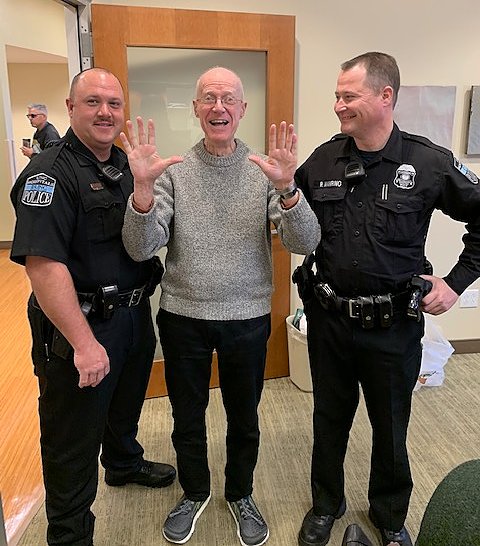
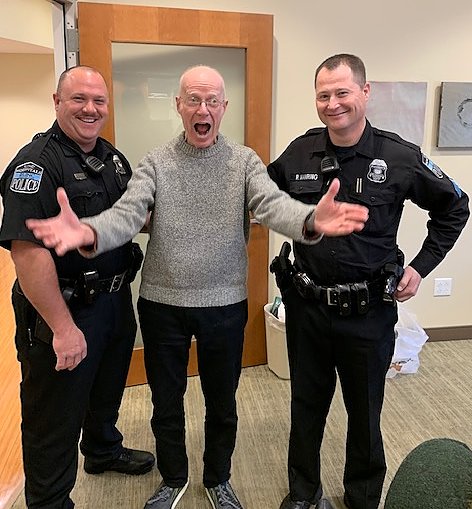
Story Addition: Of note… since this was written, at the most recent Chapel Hill group meeting… Ken walked in to group to see two police officers standing by talking to the group leader, Abbe. They had never heard of APHASIA … After Ken realized he wasn’t being arrested (!!), he proceeded to identify his medical ID bracelet that says “aphasia “ as well as verbally explain what happened to him as a result of his stroke. The officers were enlightened, appreciative, and I think, really glad they met Ken and his group mates. Importantly, it was clear that Ken felt proud to have advocated and educated !! I LOVE this story… Advocacy by clients is the very best form…as they say, “Nothing about us, without us.”

12 Days of Tap 2018: Day 9

Turning 50 with TAP

Helen Moses

On November 8, 2018 I turned 50! A year earlier, on the day I turned 49 and began my 50th year of life, I knew I wanted to do something BIG to celebrate this half-century milestone – something big that involved giving back. By January 2018, I felt called to raise $10,000 for TAP as my 50th birthday project, and made a public commitment to raise both the money and aphasia awareness with the help of my friends.

I picked TAP because I am a speech-language pathologist, and my first work after graduate school was in a brain injury unit serving patients with aphasia. My experiences with the patients and families I met made me vow to never take my voice for granted again. Getting involved in TAP brings me full circle to where I began my career, and my new relationships with members of the TAP family feed my soul. (I now have a voice and messaging coaching business, where I empower professionals to use their voices to make a difference.)

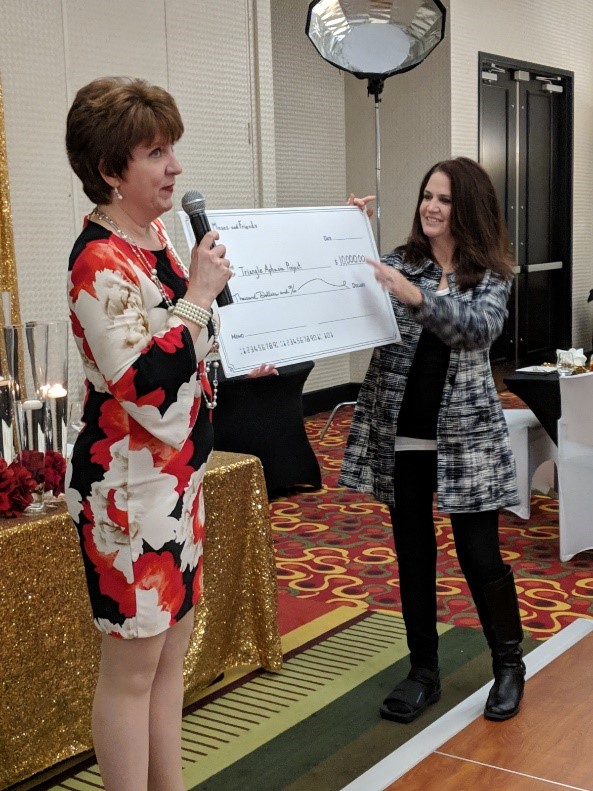
In this photograph, taken at my 50th birthday party, you can see me giving a big check for $10,000 to Maura. If you look closely, you can see that the date is not yet filled in. That’s because I haven’t finished yet!

So far, my efforts have raised over $4000 toward my $10,000 goal! I will continue working to raise the full $10,000 as soon as possible. I will continue to raise awareness of aphasia and of TAP as well. You will continue to see me at TAP and TAP events, promoting this amazing organization and its fantastic people on Facebook Live videos and in the community. Yes, I’m afraid I am a TAP fan for life, and the TAP family is stuck with me.

(I am especially a fan of the TAP-Tastics, and their music, because I am a singer too. In fact, the reason I decided to become a speech pathologist in the first place is because I learned that people with aphasia can sing even when they can’t speak. That still blows my mind! I am in awe at the human brain’s capacity to make new connections that bypass the parts damaged by stroke, injury, or disease.)

Helen Moses

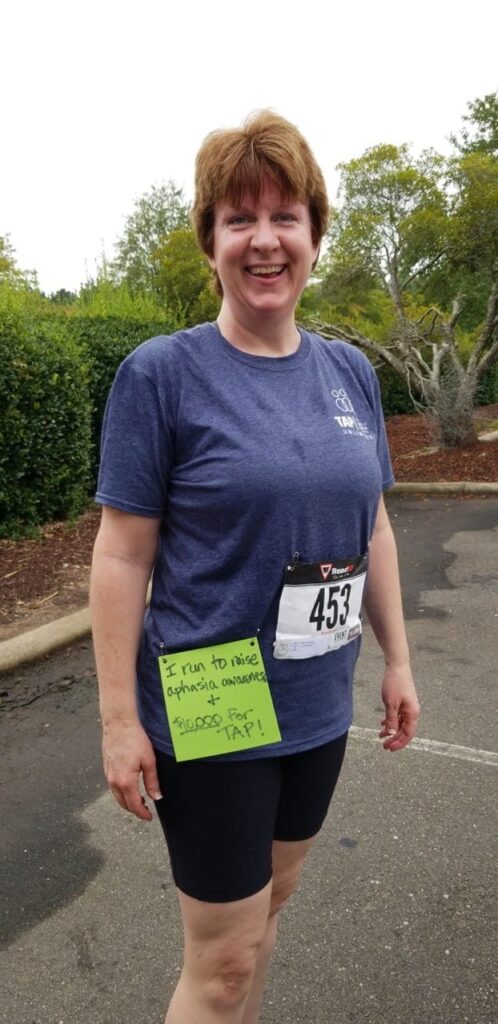
Here is another of my favorite photos from this year that shows how getting involved with TAP has inspired me to do something for my health – to participate in the annual Strides for Speech 5K event. I ran/walked the distance and beat my personal time goal by over a minute! I got to interview some awesome people while at that event, and share some of their stories with my Facebook community. What a great day!

Finally, here is a link to one of my #TAPTuesday videos. I posted a new one every Tuesday over several months leading up to my birthday. This one was in September, and it got 353 views on Facebook!

If my story has inspired you, you can still donate directly to TAP as part of my birthday fundraiser. Here is the link to do so: http://bit.ly/Happy50thBirthday2Helen

I wish each of you in the TAP family a very meaningful holiday season!

www.HelenMoses.com


From the TAP Home Office:

I think most directors of nonprofit organizations would tell you that it’s not every day that a person walks into your office declaring their individual desire to raise $10,000 for your organization for their own birthday celebration goal! Yep,…pretty unique, and incredibly fortunate for TAP …this is exactly what happened to TAP! Helen Moses, a Voice and Messaging Coach and yes, a Speech Language Pathologist, shared her goal with us and in the process of doing everything in her power to achieve this lofty objective, she created a movement…she educated, she made awareness a priority and engaged people in her efforts that had never heard of aphasia before!

We are so grateful to have met this change agent and know that her efforts on TAP’s behalf made her part of the TAP family forever!

Thank you Helen for all you did, for all you do and for all you are!

12 Days of Tap 2018: Day 8

Self Esteam

Tamara Lapsley

My name is Tamara Lapsley and I’m a Speech-Language Pathologist and a TAP Communication Support Team volunteer.  A little over 5 years ago, a dear family friend’s 18 year old son — Austin Harrell – suffered a large LMCA stroke.  I had known Austin since he was born and had watched him grow up, play soccer, attend church with my kids, and go on annual camping and lake trips with our family and 3 other families from church.  When Austin suffered his stroke 3 weeks before heading off to college, my heart truly broke knowing all that lay ahead of him and his family.  However, in the process of trying to figure out how our group of friends could support Austin and his family through this crisis, I found out about Triangle Aphasia Project and Maura Silverman’s Communication Support Team model.  I immediately felt a renewed sense of hope about Austin’s situation!

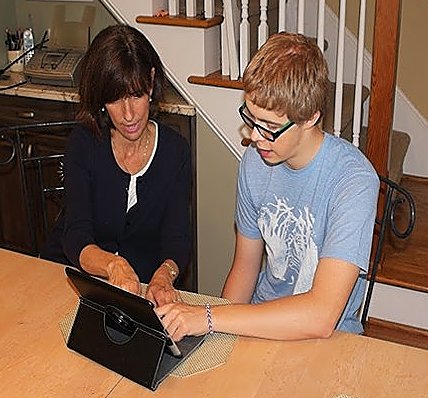
Austin’s family contacted Maura and as soon as he returned from the inpatient rehabilitation program at the Shepherd Center in Atlanta, Austin became involved with TAP.  Almost immediately Susan Harrell and Maura organized Austin’s Communication Support Team, of which I have been honored and blessed to be a part of over the last 5 years.  In conjunction with many other volunteers as well as several speech-language pathologists, Austin has gone from working on following 1-2 step directions and saying simple words and phrases to completing a college course each semester, writing college papers, and carrying on conversations with peers and strangers.  Recently at TAP’s Christmas Open House I tried to make my way over to talk to Austin but wasn’t able to do so BECAUSE he was carrying on a lengthy conversation with a stranger.  It brought tears to my eyes and joy to my heart!!

As you can see, TAP and the Communication Support Team/Life Participation Model of therapy has had — and continues to have– a tremendous impact on Austin’s life, as well as the lives of countless others.    It has also had a huge impact on my life and prompted myself and another family friend of Austin’s – Angie Hudson — to co-found Esteamed Coffee, Inc., a nonprofit coffee shop and bakery to employ individuals with communication, intellectual/developmental, and/or visual disabilities.   One of the goals of this coffee shop will be to extend the Life Participation Model of therapy to the employee’s work and social environments.  Maura has graciously agreed to be on the Board of Directors of Esteamed Coffee and is lending her 15 years of nonprofit expertise to this endeavor.  We are so excited about taking what we have learned from the Communication Support Team model and extending it to the individual’s work environment!  Please visit our website at www.esteamedcoffee.com to learn more.


From the TAP Home Office:

I recall reading the book “in An Instant” chronicling the story of Bob Woodruff’s tragic brain injury while on assignment in Iraq; his recovery and the advice provided therein by his wife, Lee, really struck a personal cord with me…. she said that everyone wants to help. Everyone who loves the individual or their family feels a need to assist in some way…but what do you do? How many times have you heard someone say “Let me know if I can do anything.” I know I heard it countless times after my mom’s stroke. But as Lee Woodruff said…just do it. Offer yourself in time and energy vs. a meal and an offer.

When Austin returned from Shepherd Center to continue his stroke rehabilitation journey, he was met by the formation of a team. A Communication Support Team (CST) made up of individuals who cared about Austin and his family and wanted to help. They pitched in and learned communication support techniques and rallied to be sure that Austin was receiving lots of goal-directed stimulation and programming.

So, … Tamara was a part of that team…and having the background as a Speech Pathologist, she understood the impact of Austin’s challenges on the ability for him to feel fully engaged and seek out purpose-driven activities. So, being the awesome person she is and knowing other awesome people, Tamara and Angie (Hudson) took inspiration into action.

The dream of Esteamed Coffee was built and is well on its way to realization! Read more about this awesome pursuit in Tamara’s story above, or check out their website! Special thanks to Tamara and Angie for inviting TAP into their efforts and allowing me to serve on their Board. Amazing people.