
Events Calendar

12 Days of Tap 2020: Day 7

Navigating a New Normal while Never Giving Up

– Dick Walker –

Maura’s Intro:

Many of our clients/families, even those with medical or healthcare experience, are thrown into a world of new vocabulary when dealing with the diagnosis of stroke and aphasia. First you are told that your loved one may not survive, and then often told that if they do live, they will have devastating and lasting disability.  There may be those that attempt to communicate hope, but the sheer intensity of information can be overwhelming.   

When I met Dick and Jane, and their amazing family, I was so moved by their expressions of dignity for this survivor and receptiveness to all tools and strategies to improve language access.  They attended Learning to Speak Aphasia training, they requested additional information, asked questions and provided support for Dick to fully participate in rehabilitation. It was heartwarming to hear of stories of Dick’s pilot adventures and watch the family truly listen.  In a world where communicative access and expression is such a challenge, listening, encouraging, and restating is a valuable skill set.   

Dick continues to make progress, not just because he participates in virtual programs with TAP, but because he is encouraged to do what he loves… golfing with friends and enjoying his family time.  Check out the story of a bucket list vacation ending in a supreme challenge, and yet, dealt with with grace and grit.  Enjoy! 


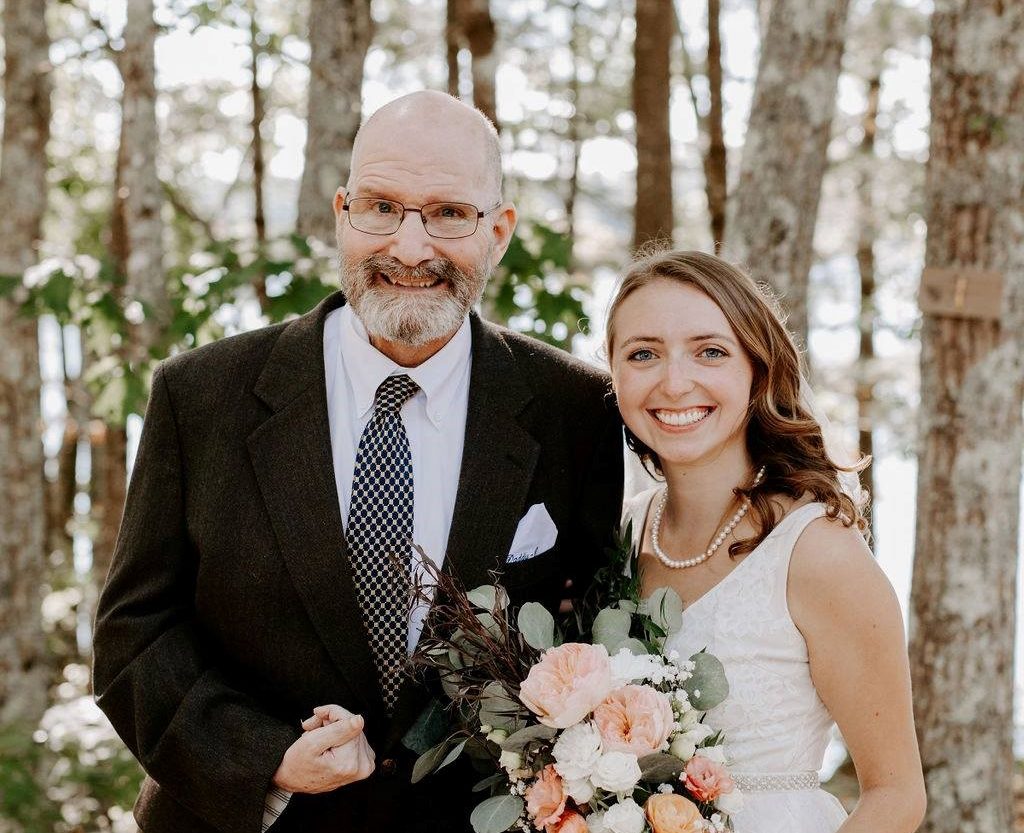
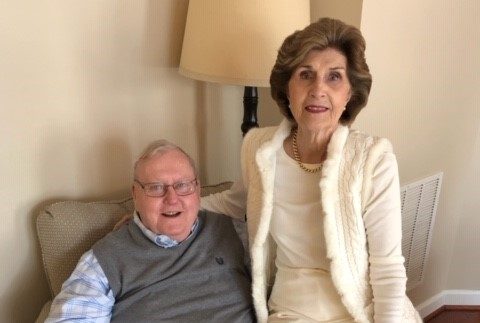
Dick (and Jane) Walker – Written by Jane

On August 1, 2019, Dick and I left RDU for the trip of a lifetime, an Alaskan cruise on Holland America.  Dick had booked our “bucket list trip” in 2018 and meticulously planned it.  We had a wonderful time with our close friends and my brother & sister-in-law. Our travel companions all said that Dick was in good spirits and in good health throughout the week-long trip.  We enjoyed the ship’s meals, activities, and shore excursions; the trip met our high expectations.  Since one of our retirement goals was traveling, we were pleased enough to buy a voucher for a future cruise before we left the ship. 

We disembarked & traveled by bus to SeaTac Airport and after saying goodbye to my brother and his wife at the gate, things rapidly changed.  I knew something was wrong when Dick got confused in an airport he had traversed hundreds of times in the years he worked for American Airlines & Boeing.  When I asked him for his boarding pass so that we could go to our gate, his speech became incomprehensible.  I asked the gate agent to call for medical help.  Dick was transported to Valley ER and after assessments and imaging, it was clear that he had had a massive stroke.  Later, I would learn that the main stroke was in his left frontal lobe, affecting speech and language.  He was then transferred to Harborview Medical Center, a Trauma 1 level hospital staffed by neurosurgeons.  Thankfully, he did not need surgery.  Two of the couples who traveled on the cruise with us were still in Seattle.  Along with them, a close friend who had moved to Seattle, and my family & other  caring friends, I was taken care of during those first shocking hours and the following weeks. My daughter set up Dick’s site on Caring Bridge. Comments, phone calls & texts from our cheerleaders assured me that we were in their prayers; that was comforting!
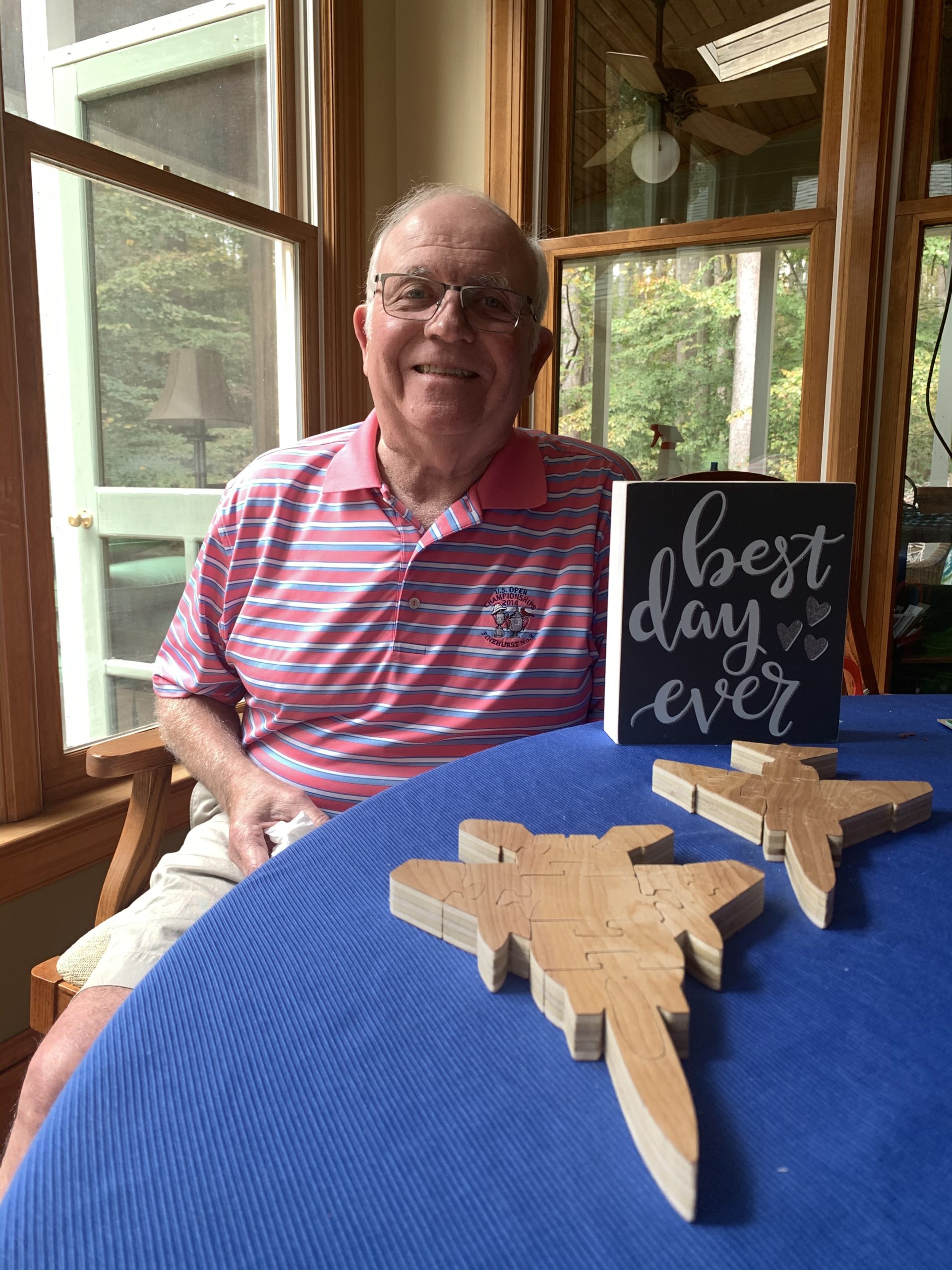
My son Jeff and my daughter Jenny arrived that first night, even though I told them “I can handle this.” (I couldn’t, not even a possibility.) Somehow, we all made it through the next two weeks.  Dick could not speak, swallow, or move, particularly on his right side. He was moved to the acute care floor after two days in ICU.  Daily therapies (OT, PT, & Speech) were designed to help him regain enough strength to endure a trip home to Raleigh as well as participate in three hours of intense daily therapy when we arrived home. Thankfully, we had purchased trip insurance, so when the time came, Kathy, our experienced flight nurse, coordinated all the many aspects of transport by ambulance to SeaTac, a very long flight home due to weather, and an ambulance transfer to Wake Med Rehab Hospital.  At Wake Med, Dick regained his strength and participated in 3 or more hours of therapy per day with dedicated, hard-working therapists (Jonathan, Darlene, Haley, Megan, & Karen).  Haley, his primary Speech Language Therapist, was very familiar with TAP Unlimited, and she used many TAP strategies. 

At the time of Dick’s stroke, I was working part-time as a Speech/Language Pathologist for Wake County Schools.  While we were in Seattle, two of my SLP friends took the time to call or text me.  They both told me about an amazing organization, Triangle Aphasia Project, and suggested that I call Maura when we arrived home.  Since I had only worked with children during my long career, there were many aspects of Dick’s stroke that were very confusing.  Stroke survivors fight an uphill battle, and are vulnerable to myriad complications.  It can be overwhelming for both the stroke patient and family members.  Maura came to Wake Med and met with our whole family.  She assured us that Dick’s intelligence was there; we just needed to find new ways for him to communicate with us, his doctors, and his therapists.  She gave us some strategies that were easy to implement.  Dick was diagnosed with aphasia and short term memory deficits among a few other conditions.  Thankfully, his long term memory and reading skills were intact, although he had to relearn his name, birthdate, & other information.  He never seemed to waiver during long therapy sessions.  He didn’t seem to lack confidence that pain was temporary and all would be well in the end.  He proved to his therapists that he could overcome obstacles as he learned to walk again, regained movement & fine motor skills in his right hand, and learned to talk to us and answer questions again. 

During the last week of September, I, along with as many of our family members who were available, attended a “Learning How To Speak Aphasia” class at TAP’s Cary location.  The information that Maura presented was invaluable.  I learned that due to neuroplasticity of the brain, Dick will continue making progress for years; one doctor had told me that he would only make improvement in the first 6-12 months.  Maura explained in detail what aphasia, anomia, apraxia, and other speech deficits are.  She encouraged us to remain connected to family, friends & our community, stay motivated & determined, and work towards “doing what you love”.   

Also during his last week at Wake Med Rehab, my daughter and I toured most of the skilled nursing facilities in the Raleigh Durham area. At some, we were told that I would not be allowed to watch or participate in his therapy sessions.  I knew that wasn’t going to work for us; I wanted to know what he was doing during therapy so that I could build on those skills, particularly in language and conversation.  I also wanted Dick to enjoy his meals in a dining room, not eat alone in his room.  We found two facilities that served meals in a dining room for their rehab patients.  Choosing the appropriate SNF reminded me of the college application process; there are so many considerations.  In the end, the facility can invite you to move there or tell you that they do not have a bed for your loved one.    
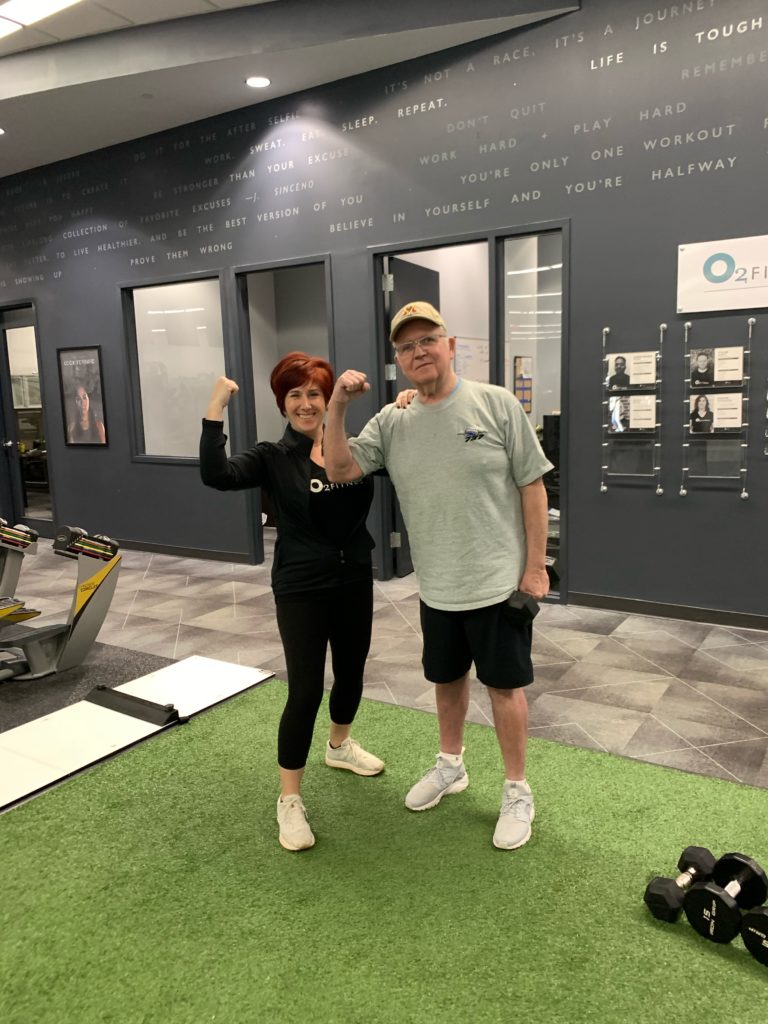
Dick moved from Wake Med Rehab to Bella Rose, an upscale SNF in Garner, NC, on September 25.  During that time, my sister Ginga and her husband Owen, who own a renovation business, went to our Raleigh home and make changes so that our home would be safe & accessible for Dick.  During the three weeks he was at Bella Rose, he participated in OT (Kaitlyn), PT (Savannah), and Speech Therapy (Kathy).  He came home from Bella Rose on October 18, 2019.   In late October, Dick continued to receive out-patient OT (Alli), PT (Sam), and Speech/Language Therapy (Lorraine) at Steps for Recovery.   Today, he has progressed from knowing, but not being able to state his own name, to conversation, from not swallowing to a regular diet, and from not moving to walking and playing golf once a week!  He has “graduated” from both OT and PT. 

In March, 2020, we started accessing TAP classes at the Cary location.  Then, Covid-19 started spreading throughout the United States, and everything shut down.  For two weeks in March, we had no resources; it was a difficult time!  I tried to provide speech/language therapy for Dick.  I think that’s when I realized how valuable TAP Unlimited is.  Maura, her staff, SLP’s, and volunteers went to work and started providing on-line zoom classes; they made it possible to participate in valuable language therapy from our home.  
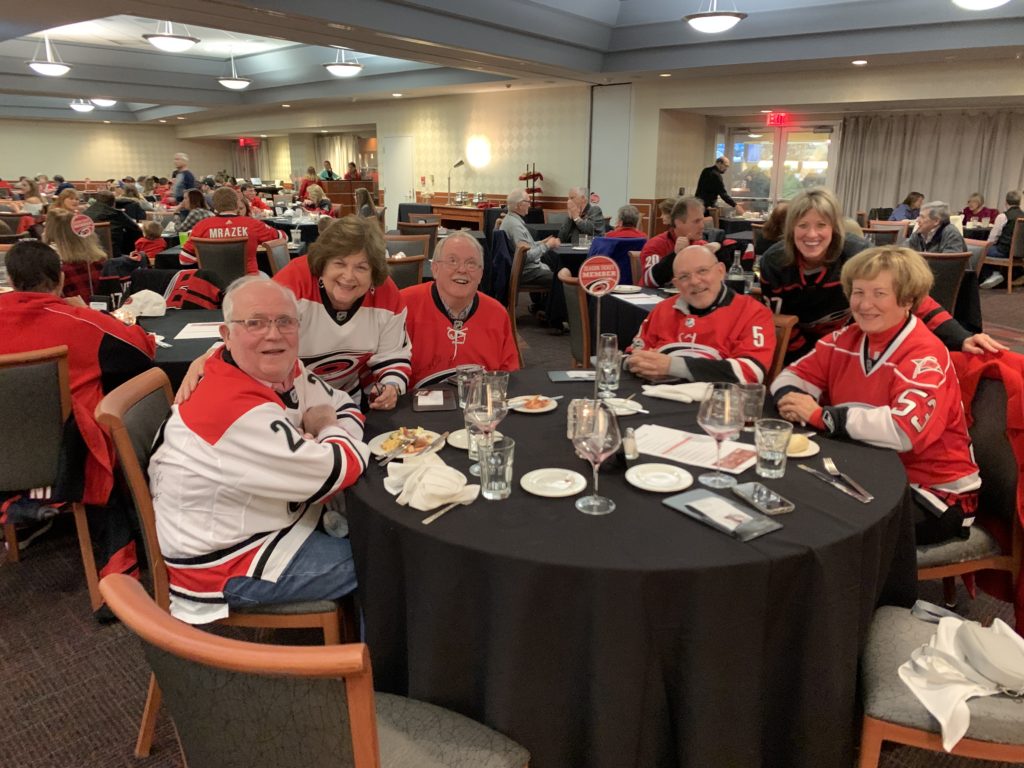
I know that Dick would not have made the progress he has made without TAP.  As his primary caregiver, TAP has been a resource for me, also.  Maura has the vision, dedication, and persistence to keep TAP Unlimited working smoothly.  Her team of dedicated, licensed SLP’s spend hours planning classes that focus on subjects such as conversation, music, reading, virtual traveling, & movies.  More recently, many additional classes in cooking, current events, hobbies, and others have been added.  There is no limit to the number of classes a person can sign in for.  Dick participated in 28 – 30 hours of classes in both September and October.  Since the classes are zoom classes, they are not limited to clients in NC.  We have gotten to know other class members, and we have become part of the awesome TAP family.  Dick tells his life-long friends that he has a job (surprising, because they all know he is retired!), which is attending classes and improving his communication skills.  Our journey has only just begun; we have many challenges to overcome. We are very, very fortunate to have the support of others at TAP who understand what our day-to-day challenges are on this long road to recovery.   

TAP Unlimited’s Mission is “to serve individuals with aphasia, their families, and the community through innovative life participation approaches that maximize communicative potential and reduce barriers to social reengagement”.  Maura and her team value each very unique stroke and TBI client, helping them and their families make the most of their lives.  Dick and I are so very grateful for them & their expertise!


From the TAP Home Office:

TAP Unlimited’s End of Year Campaign provides TAP Stakeholders an opportunity to embrace the reason for our efforts and hear from those who have been impacted by aphasia.  Aphasia, as you know, can be a devastating impairment resulting in social isolation, depression and disengagement from the passions and purpose of an individual’s life.  It can interrupt a career, destroy plans for retirement and threaten relationships.  TAP Unlimited is embarking on its 18th year of service to those effected by aphasia across the Triangle and beyond. 

Our ability to pivot and create a virtual world of connection possibilities, to stay afloat and to even thrive, has been, in no small way, a result of the generosity of our donor base.  Today, we ask that you continue to support TAP by doing the following:

  • Share this story.  Share it on your social media, in emails to your family/friends and to those you work with…it will increase awareness of Aphasia and provide hope to those who feel alone in this journey.
  • Consider an end-of-year gift to TAP.  You can donate online and make it a gift by honoring someone on the aphasia journey.
  • Donations can also be mailed in the form of a check or a donation of stock. Email us for more information.

Thank you for your faith in our organization and for supporting the 12 Days of TAP!
12 Days of Tap 2020: Day 6

A Warm and Welcoming Ambassador

– Jennifer Hargrove –

Maura’s Intro:

When TAP Unlimited required, like most other service organizations, a shift in programing, many were struck by a new opportunity.  An opportunity for a client to become a part of the larger TAP family.  Let me explain.  TAP Unlimited has a unique model in the aphasia-center world.  Being one of the first half-dozen programs in the country to serve individuals with aphasia, their families, and the community… we chose a paradigm different than the norm.  Instead of one center in one location, TAP opted to develop and institute a hub-and-spoke-model.  An administrative hub would serve as a main location, centralized for training services, meetings, etc. but as only ONE of a network of programs offered by the organization.  The “spokes” would (and did…pre-Covid) provide groups and programming within a person’s own community,…their geographical preference.  This model has many benefits:  1) increased awareness of aphasia; 2) collaboration and sharing of resources with community partners; 3) ease in introduction and transition of aphasia services and so much more!  But COVID changed all of that … at least temporarily.   

TAP’s boundaries with were lifted.  Issues of transportation, accessibility to locations, etc. were all lifted and TAP clients could attend as many (or as few) groups as they wanted to during the week.  Clients are able to check out book club, try their hand (or green thumb, as it may be) at TAPRoots / Garden group, join the TAPTastics history by getting involved in Music Mania and so much more.  This opening up of group possibilities also provides a widening of the TAP social circle.  TAP clients meet new friends, care partners connect with those traveling a similar journey and newcomers are introduced and transitioned into a warm and supportive environment.   

You can already feel the welcoming culture that TAP has enjoyed as it learns the ZOOM programming ropes…but let me introduce you to one of the ambassadors of this effort: Jennifer!  This beautiful, smart, kind and faithful woman has taken full advantage of the broadening of group options and joins multiple groups every day of our 6 day week.  She instantly projects the inviting nature we strive for in our program and everyone knows that when Jennifer is in the group…there will be laughter, smiles and no chance at getting away with less than your best effort.  I’d like to nominate Jennifer to be the group hospitality coordinator, but not sure she’d have the time with her dedication to improving her language with reading, writing and every opportunity to practice speaking!   Jennifer was the first person every group leader recommended for a TAP story and we are so blessed that she (and her daughter, Serenity) decided to share it with us.  Check it out!


Jennifer (JoAnn, Client): 

A TAP Unlimited was year on 2020.  I was scripted Samantha teaching in doctor, visions (20/20) and prescription CVS.  Sevenna teach synonyms was target.  Candace and Lynne was read books. 

Love💕 was Maura! 

Serenity (Jennifer’s Daughter):  

TAP came into our lives at the perfect time. My mom had just had a stroke and neither my brother nor I knew how to help her come to terms with her aphasia. I’m so glad we discovered TAP and enrolled her in their classes! They have helped my mom in numerous ways-from reading to speaking to socializing with those around her. She is continuously making progress, which is so amazing to see! She has a confidence and excitement about her future that I’m certain she wouldn’t have if not for TAP.  

TAP also equipped me with the tools I needed to care for my mother. I felt so lost and scared when my mom first had her stroke, but Maura and those at TAP provided family training for those caring for individuals with aphasia. Leaving the class, I knew I wasn’t alone and could lean on TAP as I cared for my mom. I am incredibly grateful for the kindness that continues to be bestowed upon my mom as she rebuilds her life. Thank you so much, TAP! 


From the TAP Home Office:

TAP Unlimited’s End of Year Campaign provides TAP Stakeholders an opportunity to embrace the reason for our efforts and hear from those who have been impacted by aphasia.  Aphasia, as you know, can be a devastating impairment resulting in social isolation, depression and disengagement from the passions and purpose of an individual’s life.  It can interrupt a career, destroy plans for retirement and threaten relationships.  TAP Unlimited is embarking on its 18th year of service to those effected by aphasia across the Triangle and beyond. 

Our ability to pivot and create a virtual world of connection possibilities, to stay afloat and to even thrive, has been, in no small way, a result of the generosity of our donor base.  Today, we ask that you continue to support TAP by doing the following:

  • Share this story.  Share it on your social media, in emails to your family/friends and to those you work with…it will increase awareness of Aphasia and provide hope to those who feel alone in this journey.
  • Consider an end-of-year gift to TAP.  You can donate online and make it a gift by honoring someone on the aphasia journey.
  • Donations can also be mailed in the form of a check or a donation of stock. Email us for more information.

Thank you for your faith in our organization and for supporting the 12 Days of TAP!
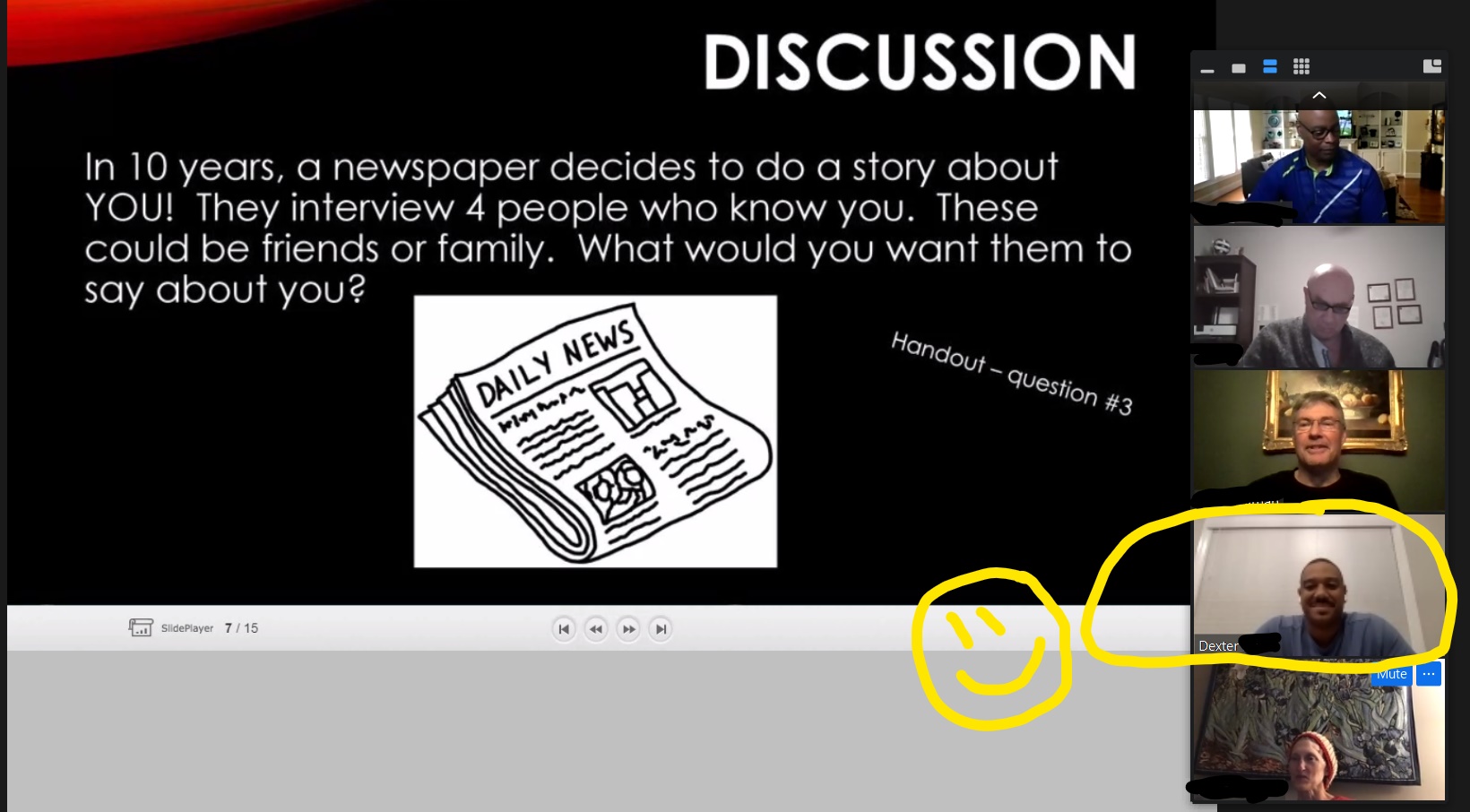
12 Days of Tap 2020: Day 5

A Setback and a Reason for Hope

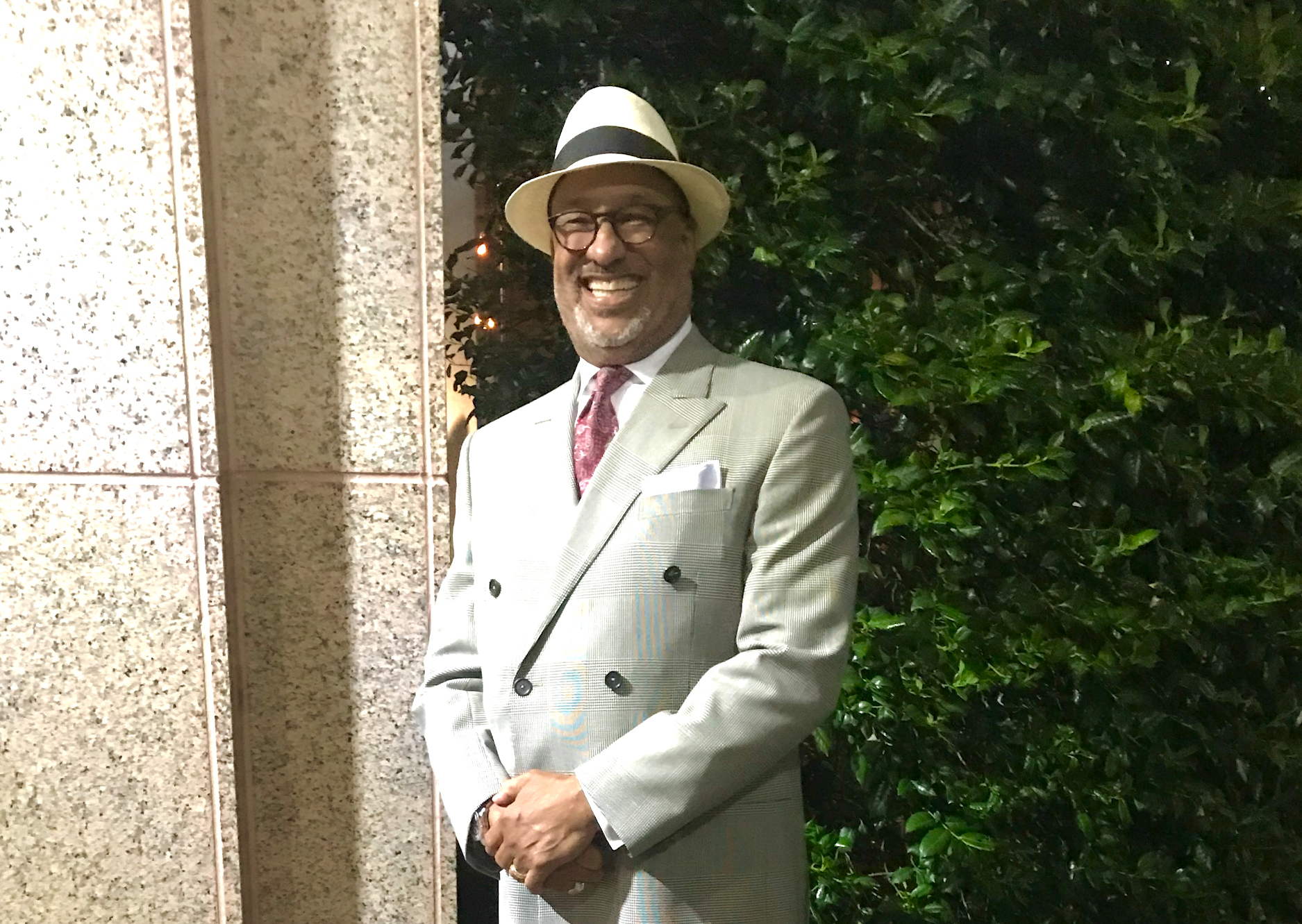
– Dexter Davis –

Maura’s Intro: One of the great joys of TAP Unlimited is the ability to give the gift of hope.  This opportunity begins on the day of the initial consultation with TAP and continues throughout the programming choices, trainings and the groups themselves.  We take great pride in partnering with the amazing hospitals/medical centers and rehabilitation programs in the area to create smooth transitions that are wrapped in the spirit of connectedness and positivity.  It wasn’t always like this. Don’t get me wrong, we have ALWAYS had the support and engagement from our community of providers at all levels of the continuum of care.  But referrals often came when an individual was months or years into their rehabilitation journey.  It was THIS community that helped us change the timeline for the better.  The earlier a person is referred to TAP, for example, the more we all noticed families learning the do’s and don’ts of communication support, the less we saw people isolated or frightened about what this path would look like and the more we could support the work of the speech pathologists in the hospitals, rehab centers, home health, etc… it was a great meeting of the minds!  And it still happens today!

I have a saying that I use, profess and even use as my platform… it’s “Own Your Journey.”  This comes from understanding that all the tools, resources, support and training won’t be enough without complete buy-in and ownership by the individual on the journey. When I met Dexter, I knew in minutes that he was unstoppable by this very character trait.  He told his stroke story with an understanding that this event was the start of a new chapter in his life and that he was equipped (or he’d find the tools to equip himself) to address this challenge head-on!  The growth mindset was evident … see a challenge, seek out the strategy to compensate and rehabilitate and then practice it…again and again.

Dexter has quickly become a valued member of the TAP family…he is counted on for assessment of a situation and a way to find a lesson in every roadblock.  Yes, strokes are a “set-back” and a difficult interruption to your life plan.  And yes, strokes happen to young, healthy and active individuals.  But in this story, and in all of his interactions with TAP…Dexter reminds us that we are not alone and there is reason for hope!


Dexter (Client):

Set Back- Stroke February 4th 2019  

I went to the urgent care to take care of my gout which I was in pain. 

The doctor/ nurse discharge diagnosis was Atrial Fibrillation, High Pressure, Gout, Ischemic Stroke, Impaired Speech (Aphasia) and heart failure. 

My family drive and flight to Boston from North Carolina, mom, brother and niece to support me. I wake up in ICU a day later and they walked into ICU. I remember the doctors asking questions about me and I didn’t understate the questions. 

I had Aphasia!  

It was tough to communicate with my family, nurse and doctors. I was frustrated communicate to people in the family. I was able to spell some words and write it down to communicate. I spent 12 days in the Cambridge hospital to improve my heart and Aphasia. I have been working on my heart and my speech and Aphasia since these days in Boston. 

I have change so much to prevent to another stroke: 

  1. Closer to God
  2. Take medicine 
  3. Keep follow up doctors’ appointments 
  4. Changed my diet of vegetables and fruit 
  5. Be active 45 minutes three times a week. Walking and riding my bike around Charles River park in Boston. My favorite place to recover my stroke and reduce stress! 

My family research Aphasia and educate to cope with a family member that had a stroke with Aphasia. Aphasia has many types of Aphasia.

My family and me noticed my biggest weakness is audio comprehension.

My niece found TAP unlimited online and thought this program would continue recover my speech. I have met with some good people at TAP unlimited, so I can progress with this condition and life with Aphasia. I have also met some golf buddies! 


From the TAP Home Office:

TAP Unlimited’s End of Year Campaign provides TAP Stakeholders an opportunity to embrace the reason for our efforts and hear from those who have been impacted by aphasia.  Aphasia, as you know, can be a devastating impairment resulting in social isolation, depression and disengagement from the passions and purpose of an individual’s life.  It can interrupt a career, destroy plans for retirement and threaten relationships.  TAP Unlimited is embarking on its 18th year of service to those effected by aphasia across the Triangle and beyond. 

Our ability to pivot and create a virtual world of connection possibilities, to stay afloat and to even thrive, has been, in no small way, a result of the generosity of our donor base.  Today, we ask that you continue to support TAP by doing the following:

  • Share this story.  Share it on your social media, in emails to your family/friends and to those you work with…it will increase awareness of Aphasia and provide hope to those who feel alone in this journey.
  • Consider an end-of-year gift to TAP.  You can donate online and make it a gift by honoring someone on the aphasia journey.
  • Donations can also be mailed in the form of a check or a donation of stock. Email us for more information.

Thank you for your faith in our organization and for supporting the 12 Days of TAP!
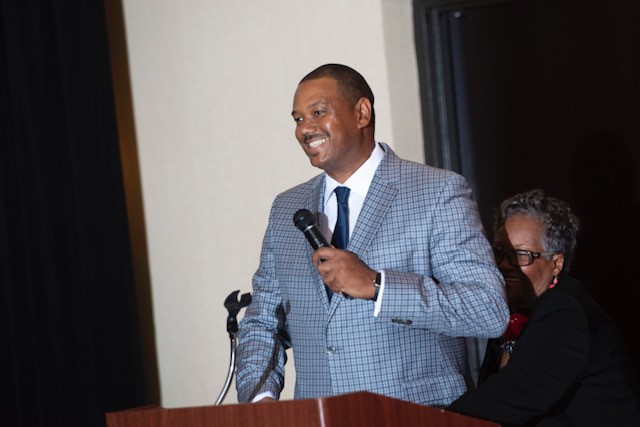
12 Days of Tap 2020: Day 4

From Fear to Friendship

– Michelle Kilgore –

Maura’s Intro: It is often said that a story is best told by its author. This is true for everything from recounting family histories to self-advocating for needs by an individual struggling with access. To truly TAP (all pun intended) into the power of autobiographical narratives, you need a person willing to be vulnerable, to take chances and to embrace the power of influence. This is exactly how I would describe TAP client and advocate-extraordinaire, Michelle.

Michelle, and her wife, Gina didn’t just “step” into a role at TAP Unlimited, …they took a giant leap! Absorbing all of the lessons from Learning to Speak Aphasia training, watching intently and modeling group leaders cues and supporting every effort to increase aphasia awareness…this family launched into a leadership role in our organization. I love to listen to Michelle express genuine interest in every TAP client’s passions and her willingness to share her own. She has adopted new hobbies in the realm of art, horticulture and even cooking. I was not surprised by the enthusiastic nomination of this family to share their aphasia story…but, I was, once again, extremely grateful.

Enjoy!


Michelle (Client): I remember meeting Abbe the first time when my wife brought me to TAP. She asked ME to talk, and it was so hard. I had a hard time putting together a sentence talking to her. She told me how TAP would be very beneficial to me having other people with aphasia to talk to.

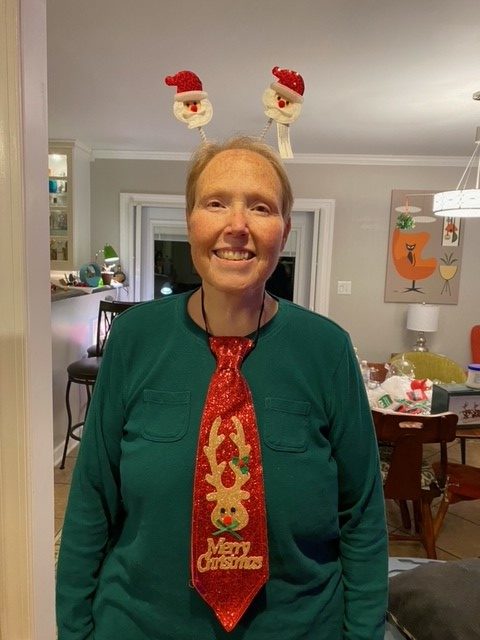
Michelle dressed in a Christmas costume

The very first meeting I went to at TAP I was very nervous, but I was welcomed and when I started to talk, I stopped having the fear to speak. I felt like the way I talked was ok because there were other people there that understood me and what I was going through. I became so excited to go to TAP because every time I went, I saw myself getting better and better. I felt less isolated. The people I have met have now become more than friends. They are family and are extremely important to me.

I have learned so many things from TAP classes, like how to garden, and as a 57-year-old woman, I am now finally learning to cook through TAP. As a very spiritual lesbian woman, I have been fully accepted at TAP, even in my TAP bible class, which means so much to me. I love spending time and learning and laughing with all of my TAP friends. It has made me braver to be able to talk to strangers out in public, and make my own phone calls for appointments and personal matters.

TAP has taken me from a place of fear and helped me find my voice!

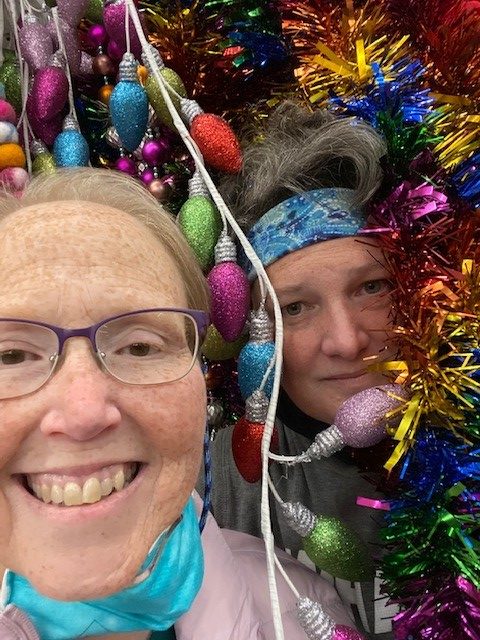
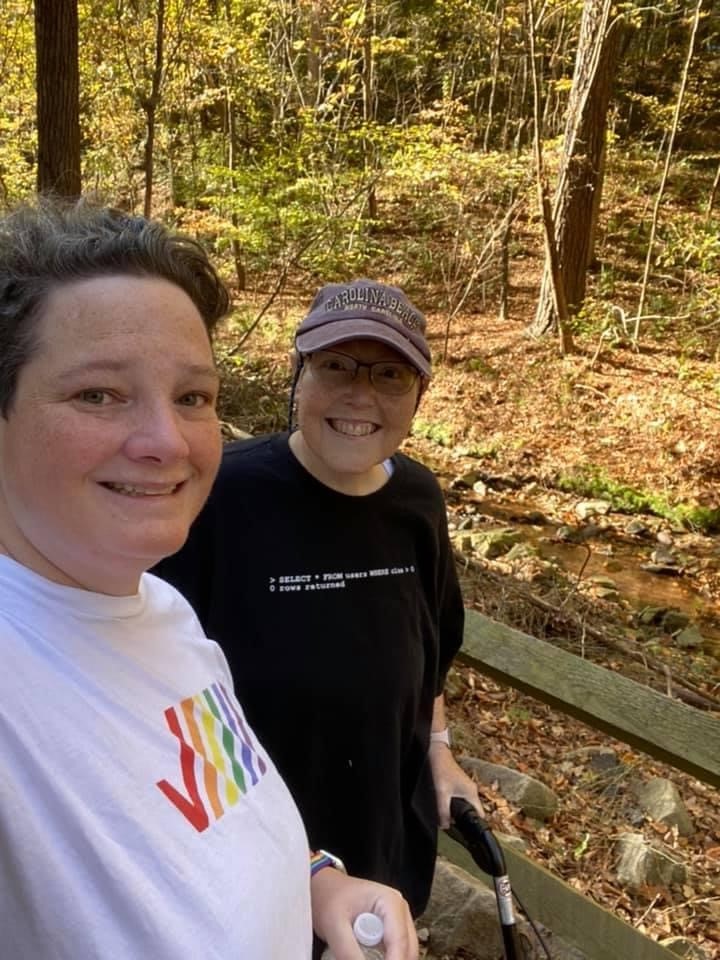
Two women smiling with woods in the background

Gina (Spouse/Care Partmer): My wife, Michelle, had a stroke 1 year ago. After a long stay in the hospital and rehab, several friends, nurses and therapist told us we needed to contact TAP. I was very nervous about this. I knew Michelle wouldn’t be working anymore, and I was terrified that we would not be able to afford any more medical fees. I didn’t know what to expect honestly. When we met with the TAP representative and we were told what TAP does, and the fees, what a relief. We got Michelle started with TAP right away, straight out of rehab.

With the pandemic especially, TAP has been a true-life saver for Michelle. As I sit in my office working during the day, it fills my heart with such joy listening to her laugh, cry and just connect with other people with aphasia. She is learning to garden and cook. She is encouraged to read and write and do art, which I personally love. I am incredibly grateful for what TAP has done for Michelle and has taught me about what to expect and how to help Michelle cope with her aphasia.


From the TAP Home Office:

TAP Unlimited’s End of Year Campaign provides TAP Stakeholders an opportunity to embrace the reason for our efforts and hear from those who have been impacted by aphasia.  Aphasia, as you know, can be a devastating impairment resulting in social isolation, depression and disengagement from the passions and purpose of an individual’s life.  It can interrupt a career, destroy plans for retirement and threaten relationships.  TAP Unlimited is embarking on its 18th year of service to those effected by aphasia across the Triangle and beyond. 

Our ability to pivot and create a virtual world of connection possibilities, to stay afloat and to even thrive, has been, in no small way, a result of the generosity of our donor base.  Today, we ask that you continue to support TAP by doing the following:

  • Share this story.  Share it on your social media, in emails to your family/friends and to those you work with…it will increase awareness of Aphasia and provide hope to those who feel alone in this journey.
  • Consider an end-of-year gift to TAP.  You can donate online and make it a gift by honoring someone on the aphasia journey.
  • Donations can also be mailed in the form of a check or a donation of stock. Email us for more information.

Thank you for your faith in our organization and for supporting the 12 Days of TAP!
12 Days of Tap 2020: Day 3

A Friend’s Story:  Forever Friends and “Zoom-Mates”

– Carolyn Taylor –

Maura’s Intro: One of the saddest things that I hear during consultations with new clients when arriving (or in this case logging in), is when an individual says “My friends are all gone.” Or, “Where did my friends go?”  Unfortunately, this is not an unusual occurrence and I am left to counsel, reassure and empathize noting that I am certain that they care, that they want to help, but just aren’t sure how to communicate with someone with aphasia. This uncertainty often results in a distancing that is unfortunate and may contribute to the social isolation that is so common with aphasia.   

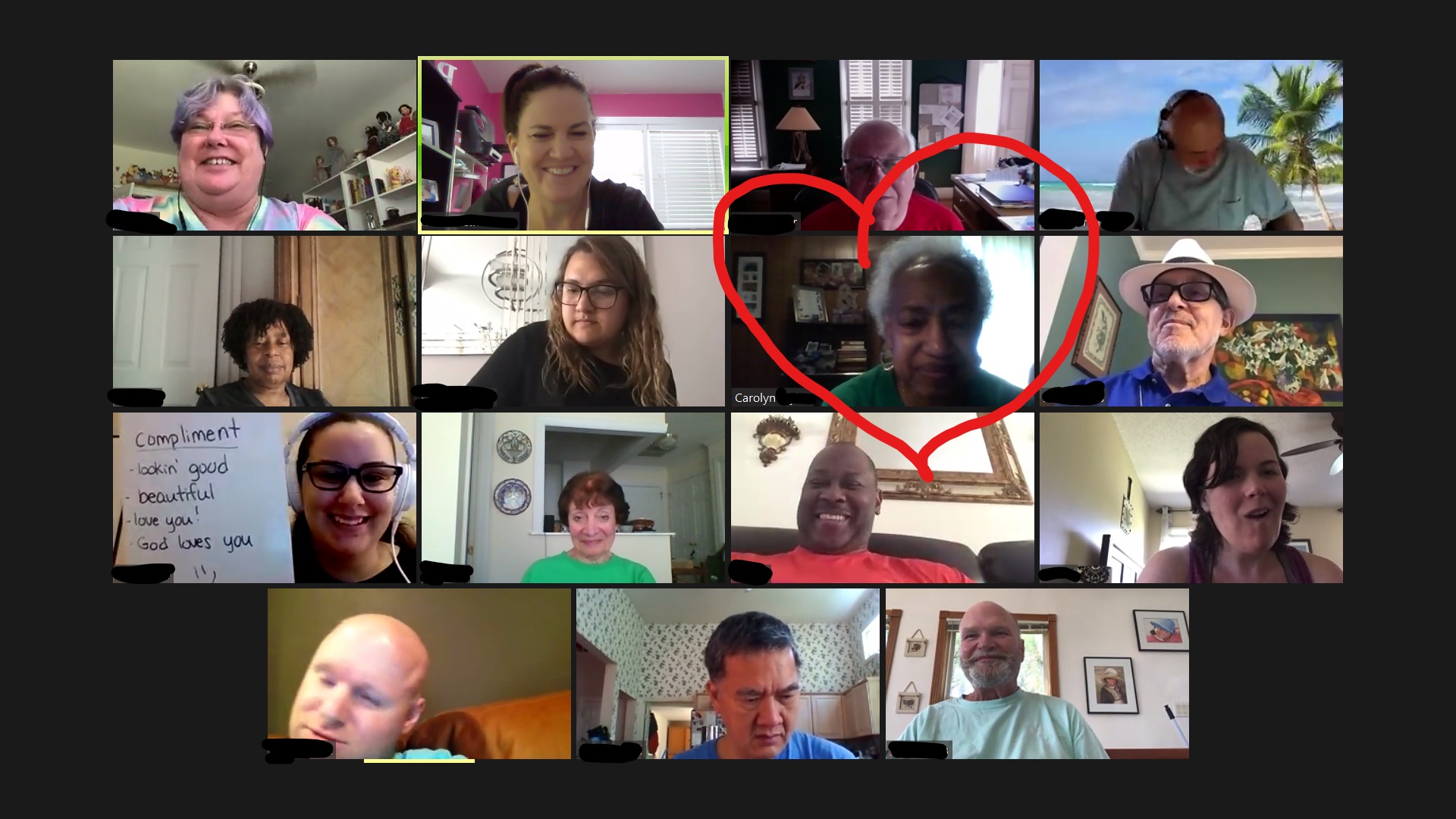
15 participants in a Zoom meeting with one person circled with a red heart shape

This story is the direct opposite scenario. When I met Carolyn and her two besties (from college-days), as amazing as I thought Carolyn was, …I was equally as taken by her friends.  These true-blue friends exuded positivity and encouragement and communicated a sincere desire to learn as much about Carolyn’s aphasia journey as they could.  Carolyn was surrounded by people who believed in her and would help her access any and all help she needed to maximize her recovery.   

You will love this story, these friends and the beautiful, sweet Carolyn that graces 5-6 of our groups a week!


Mary Butler (TAP Family Member and Carolyn Taylor’s Caregiver): I am writing this story on behalf of my forever sister-friend, Carolyn (“CJ”) Taylor.  We’ve known each other since 1965 upon arriving on campus as college freshmen, and we were roommates three of our four years at North Carolina Central University in Durham.  

Carolyn has suffered two strokes — both of which occurred early morning while alone and driving her automobile — and both of which were left-brain injuries.  The first was in 2005 while heading to work as a social worker with Person County Social Services Agency in Roxboro.   The second stroke occurred while driving to Durham for an annual physical exam in January 2019.  CJ was very fortunate to receive assistance from a caring stranger who called 911 and got her to Duke Hospital in 2005; and last year, she was able to park her car and walk into her doctor’s office. 

Aphasia after both strokes left Carolyn with difficulty getting words out and/or understanding what is being said.  She underwent surgery at Duke Hospital twice, and a very lengthy rehabilitation at Person Memorial Hospital rehab unit.  Last summer, she moved into Cambridge Hills Assisted Living where their exceptional staff helped with her adjustment to independence and post-stroke depression. In August 2019, her loving 92-year-old mom (Elizabeth Jackson) passed away, leaving CJ with great loss and sadness.  With the doctor’s consent, CJ returned to her Durham home in November 2019, with 24-hour home health care and continued speech therapy. 

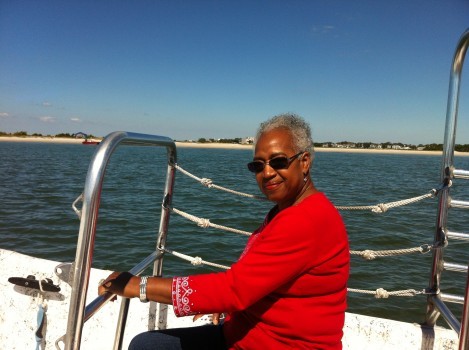
Woman on a boat off the coast with beach in the background

Duke neurologist, Dr. Graffagnino, introduced us to the Triangle Aphasia Project and thought it would be beneficial in dealing with Carolyn’s aphasia.  As co-guardians, Pecolia Beatty and I arranged an intro meeting between CJ and Maura Silverman, Executive Director; we also attended their family caregiver workshop.  More importantly, CJ felt comfortable with TAP’s overall philosophy, and she was on-board with TAP’s weekly group sessions led by Sowmya Shanker at Duke Regional Hospital’s Speech Language Pathology Dept.

Since the COVID pandemic and closure of speech therapy sessions at Duke Regional, CJ has learned to go online with TAP’s conversation groups during the week.  Although she doesn’t express in words, it’s pretty obvious that Carolyn enjoys her “Zoom-mates” because TAP helps her to connect with others who are sharing a similar journey. I am forever grateful for Maura and her team’s love, care and support of my best friend as she navigates this life-altered challenge – one that she faces each and every day. Although this road is different for everyone, it is my sincere hope that not only Carolyn’s journey, but every TAP client’s ultimate recovery, will be successful! 

Best wishes for a joyous and safe holiday season.


From the TAP Home Office:

TAP Unlimited’s End of Year Campaign provides TAP Stakeholders an opportunity to embrace the reason for our efforts and hear from those who have been impacted by aphasia.  Aphasia, as you know, can be a devastating impairment resulting in social isolation, depression and disengagement from the passions and purpose of an individual’s life.  It can interrupt a career, destroy plans for retirement and threaten relationships.  TAP Unlimited is embarking on its 18th year of service to those effected by aphasia across the Triangle and beyond. 

Our ability to pivot and create a virtual world of connection possibilities, to stay afloat and to even thrive, has been, in no small way, a result of the generosity of our donor base.  Today, we ask that you continue to support TAP by doing the following:

  • Share this story.  Share it on your social media, in emails to your family/friends and to those you work with…it will increase awareness of Aphasia and provide hope to those who feel alone in this journey.
  • Consider an end-of-year gift to TAP.  You can donate online and make it a gift by honoring someone on the aphasia journey.
  • Donations can also be mailed in the form of a check or a donation of stock. Email us for more information.

Thank you for your faith in our organization and for supporting the 12 Days of TAP!
12 Days of Tap 2020: Day 2

Speak Softly and Be Heard

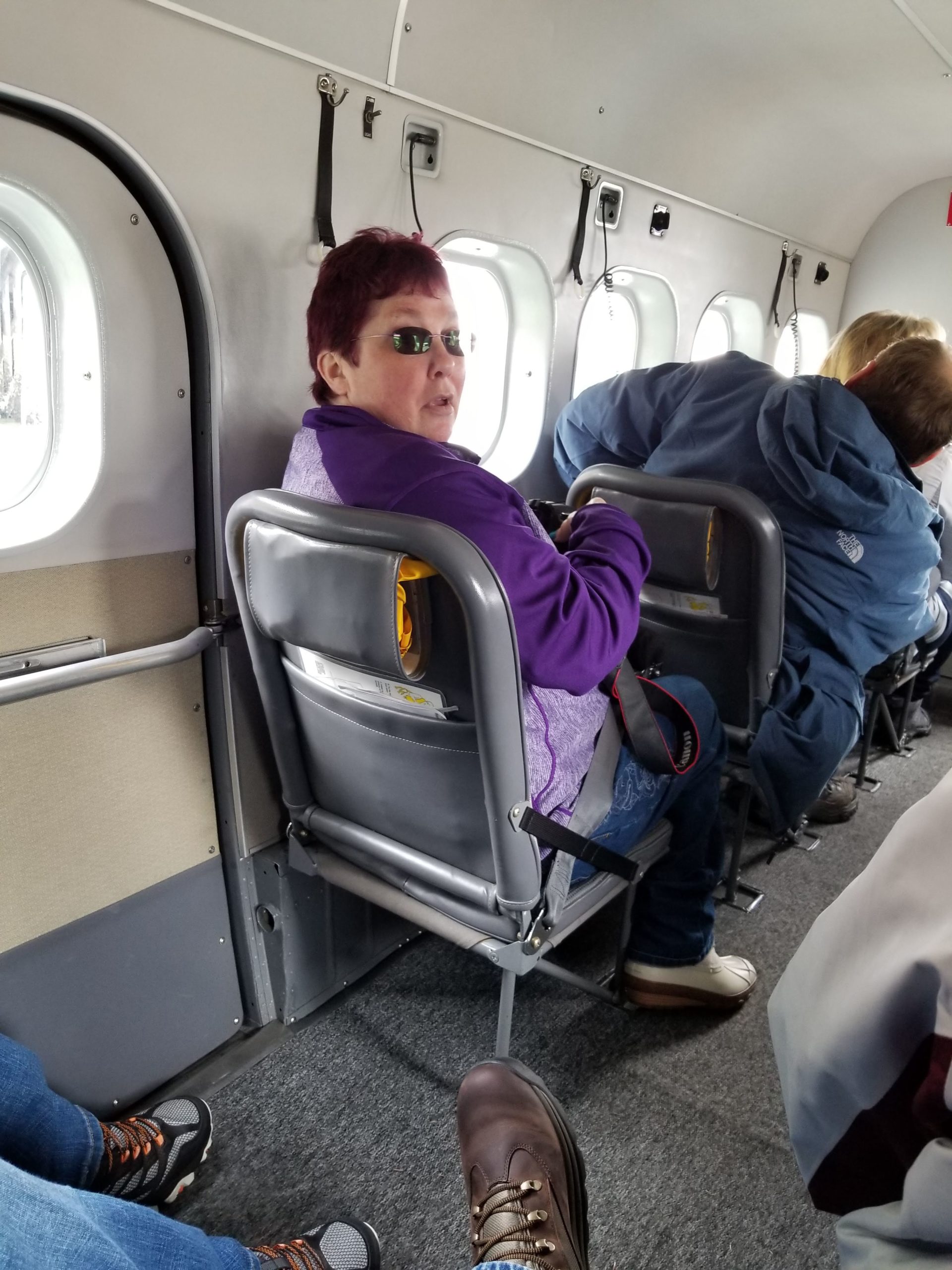
Woman on an airplane

– Melissa Stanfield –

Maura’s Intro: There are many quotes that come to mind when I think of Melissa and her soft, kind and accepting voice.  “The voice of beauty speaks softly; it creeps only into the most fully awakened souls” (Friedrich Nietzsche) is the one that rises to the surface.  Melissa’s aphasia has, as long as I have known her, never stopped her from connecting, engaging and supporting her TAP friends.  This strong and gentle support is evidenced in every group that Melissa participates in, both in person and now in our Zoom meetings.   

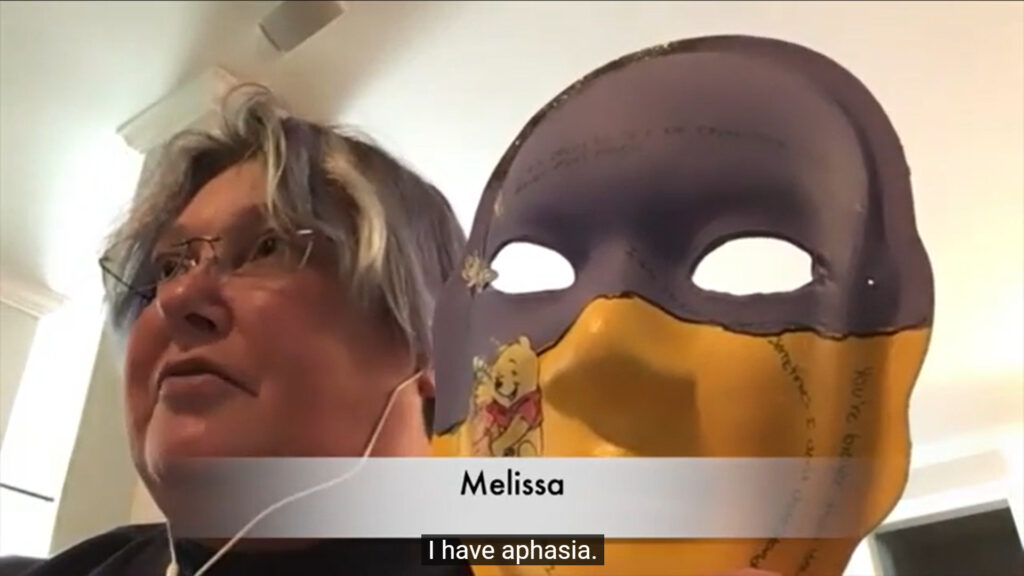
I may have a reputation (based on Melissa’s comment below 😊) of tough coaching, but Melissa does not back away from challenges.  She is the first to say “bring it on” and offer her voice to any effort that TAP makes to increase Aphasia awareness or assists in the process of neuroplasticity for herself and her TAP friends!  She recently participated in the UnMasking Brain Injury project through the Brain Injury Association of NC.  If you have not seen this video…take the time to be impressed and inspired: https://youtu.be/kwtaW6RDdxM.

Rich, Melissa’s husband, offers his perspective in today’s story and mentions the support that the “Ice Breakers” make to our organization…stay tuned for a story this week that will tell you how our sustainer program has helped keep TAP afloat, especially during this difficult time!  Rich also mentions a program called Amazon Smile.  If you aren’t familiar… smile.amazon.comClick here for instructions. You are shopping online anyways, right?  Why not have it support your favorite nonprofit.  


Michelle (client): In 2017 my world changed overnight. I had a stroke. I lost my voice. I was a nurse and never heard of aphasia.  

I had my family they were great. They supported me and encouraged me. 

Woman holding a costume mask

When I heard of TAP I was afraid to go. 

Then I met Maura and I was more afraid. 😉 

Now I can spell better and read better than before my stroke. 

I enjoy going to TAP. Zoom made possible to see friends and make new friends. 

Thank you TAP. My second family. 

Man and woman standing in front of a lake with mountains beyond

Rich Stanfield (spouse): TAP is truly a lifesaver.  TAP overcomes one’s inherent shyness, allowing people with shared experiences to get to know each other, trust each other, and learn from each other.  Melissa has really been able to be more herself, and in fact more outgoing and talkative with others than before her stroke.  This is because TAP gave her a voice she didn’t think she had.  TAP has given us methods to prepare for a doctor’s appointment, a shopping trip, etc.  When I cannot go with Melissa, she still has the confidence to go it alone.   

In today’s COVID environment, we especially appreciate TAP finding a solution to serve their clients – Melissa looks forward to TAP sessions so she can see friends that she otherwise would not. 

I am glad that we are fortunate enough to afford Melissa’s sessions, as well as provide ICEBREAKER donations for those that are not so fortunate. I hope others consider donating to TAP, too.  Also, don’t forget smile.amazon.com!


From the TAP Home Office:

TAP Unlimited’s End of Year Campaign provides TAP Stakeholders an opportunity to embrace the reason for our efforts and hear from those who have been impacted by aphasia.  Aphasia, as you know, can be a devastating impairment resulting in social isolation, depression and disengagement from the passions and purpose of an individual’s life.  It can interrupt a career, destroy plans for retirement and threaten relationships.  TAP Unlimited is embarking on its 18th year of service to those effected by aphasia across the Triangle and beyond. 

Our ability to pivot and create a virtual world of connection possibilities, to stay afloat and to even thrive, has been, in no small way, a result of the generosity of our donor base.  Today, we ask that you continue to support TAP by doing the following:

  • Share this story.  Share it on your social media, in emails to your family/friends and to those you work with…it will increase awareness of Aphasia and provide hope to those who feel alone in this journey.
  • Consider an end-of-year gift to TAP.  You can donate online and make it a gift by honoring someone on the aphasia journey.
  • Donations can also be mailed in the form of a check or a donation of stock. Email us for more information.

Thank you for your faith in our organization and for supporting the 12 Days of TAP!
12 Days of Tap 2020: Day 1

Aphasia: Connections and Friendship

– Pete Andrews and Justine –

Maura’s Intro:  Welcome to the first installment of the 12 Days of TAP!  

Justine and Pete

2020 brought more than a global health crisis … it threatened the impassioned work of this, and many other, service organizations.  I recall the first time I heard the term “social distancing”.  As Executive Director of a nonprofit built on connectedness, I shuddered to think of how the very mission of TAP would continue in a world where we could not hold our friends near as they struggled with a diagnosis of aphasia, train their spouse or grandchildren on how to communicate with them, or reach over their shoulder to cue them to achieve their critical reading or speech goals.  But with the gift of support and encouragement by all of the TAP stakeholders, … we stood up and faced this challenge with the grit and determination that I credit my dear mom with!  We shifted to serve and we created a virtual TAP program that would continue to offer programming to each of our divisions:  individuals with aphasia, people who loves someone with aphasia, and those who serve people with aphasia.

It seems only fitting to kick off the 2020 End of Year Campaign with THIS 12 Days of TAP story… a story from, and about, a man who also personifies grit in his efforts to continue to connect and improve.  And to include the words of his daughter, a powerhouse herself, who has stepped up to help on TAP committees, organized and ran her own ½ & full marathon to benefit TAP and served as my props person for our 2020 Virtual Event!  I introduce you now to Pete Andrews and Justine Knight!


When my dad had his stroke, I would have never imaged he could be as happy and fulfilled as he is today.

My dad, Pete, had his stroke almost 13 years ago. One in three stroke survivors experience depression, and my dad was one of them. He was dealing with his new physical limitations, aphasia and the reality that he could never resume his job as a pilot. When he reflects on that time he says “I hated myself.” 

Fast forward to 2020. During a year when so many people are experiencing isolation and negativity, my dad is thriving. 

When COVID-19 hit, my dad’s first concern was that he wouldn’t be able to attend his TAP group. His speech therapy, his support group, his friends – everything he got out of attending TAP would be gone indefinitely. 

We quickly realized that wasn’t the case. With creativity and patience, TAP leaders taught clients like my dad how to use Zoom to connect to one another. 

My dad’s calendar filled up and he was spending more time with TAP than ever before because it was accessible at the click of a button. While the rest of us were feeling disconnected from our previous lives, my dad was more social than he’s been in 13 years. 

When weeks turned into months, the effect of his time with TAP became visible. His connections turned into friendships. His will to improve his writing showed when he addressed envelopes or made lists. And his speech is unbelievable.

TAP has brought so much purpose into our lives. We are blessed to be part of the TAP family and hope that you’ll join us.


From the TAP Home Office:

TAP Unlimited’s End of Year Campaign provides TAP Stakeholders an opportunity to embrace the reason for our efforts and hear from those who have been impacted by aphasia.  Aphasia, as you know, can be a devastating impairment resulting in social isolation, depression and disengagement from the passions and purpose of an individual’s life.  It can interrupt a career, destroy plans for retirement and threaten relationships.  TAP Unlimited is embarking on its 18th year of service to those effected by aphasia across the Triangle and beyond. 

Our ability to pivot and create a virtual world of connection possibilities, to stay afloat and to even thrive, has been, in no small way, a result of the generosity of our donor base.  Today, we ask that you continue to support TAP by doing the following:

  • Share this story.  Share it on your social media, in emails to your family/friends and to those you work with…it will increase awareness of Aphasia and provide hope to those who feel alone in this journey.
  • Consider an end-of-year gift to TAP.  You can donate online and make it a gift by honoring someone on the aphasia journey.
  • Donations can also be mailed in the form of a check or a donation of stock. Email us for more information.

Thank you for your faith in our organization and for supporting the 12 Days of TAP!
12 Days of Tap 2019: Day 6

The Blessing of TAP

– Russell and Betty Nemitz –

From the TAP Home Office:

Generally, when one thinks about Aphasia, they think Stroke, TBI or even tumor.  There is another etiology of aphasia that is different in onset, progression and outcome.  This aphasia is often referred to as PPA, or Primary Progressive Aphasia.  PPA is under the umbrella of FTD (Frontotemporal Dementia) and can present in many different forms (i.e. semantic, agrammatic or logopenic), but the insidious slow onset of language impairment is common among all variants.  Individuals with PPA will have progression of this language impairment, as well as eventual cognitive challenges.  PPA is very frustrating for the individual and his/her family and friends. 

TAP is honored to serve so many families with PPA that we needed to add a special group to our lineup.  TAPLinks is the program which currently meets weekly to provide language strategies, communicative practice and training/support.   We know that this is just a piece of the puzzle needed, but with your support, we can add additional components to this essential program.

Today, Betty and Russell share a little about their PPA journey and how TAP has helped.  We are so appreciative of their candor and engagement in TAP Unlimited.


December is the perfect time of the year to share with others the good times and the blessings we have received throughout the year. Let me do that now. 

My husband Russell was diagnosed earlier this year with PPA, primary progressive aphasia. His health records showed no signs or symptoms of a stroke. We were told that the condition only gets worse, ending in the loss of the ability to speak. We felt hopeless. 

However, suddenly a new TAP group was introduced which meets each Monday at TAP in Cary. 

What a blessing! At present there are about 8 caregivers and 8 loved ones who attend. The group allows both patients and caregivers to discuss and share their joys and concerns. The beauty of the group is that each one is able to see that they are not alone and can readily understand the pain and suffering that others are enduring. However, the group laughs a lot and we give tips to each other about how to cope. 

The drive from Raleigh to Cary is well worth it for the boost the group gives to both of us.  It is truly a blessing to us and we are so grateful to TAP and our new friends.  Come join us!

12 Days of Tap 2019: Day 12

Good News Travels by Word of Mouth

– Sherron and James “Butch” Williams –

October 31, 2012 was the beginning of a new norm for our family and especially my husband Attorney James “Butch” Williams. We were blessed to learn about Maura Silverman and TAP through my daughter’s close friend Alexis Greene. Olivia, our daughter, shared this life altering experience with Alexis who then shared that her mom also had a stroke. 

We are so thankful for God’s timing. Alexis was able to give her personal insight, hope, and validate Olivia’s concerns and feelings. Within days after the Butch’s stroke, Dwayne Greene, Alexis’ dad called me. He said, “You don’t know me, but our daughters are friends and I know your husband. My wife, Kim, had a stroke so I know what you are going through. If you ever need encouragement, a sounding board and more importantly resources, I know the person and place you should call.”  

That was the beginning of a new friendship for life. Dywane proceeded to tell me about Maura and the work she does for people diagnosed with aphasia. He said she was very busy and did not know if Maura could take us on as clients. However, when I called Maura, Dywane had already spoken to her and she immediately asked, “When can I come and evaluate your husband?”  

Maura came within days. She was heaven sent. I had never met anyone like her. Her passion, knowledge, and heartfelt emotions about what the client and their family are going through were unmatched. Her enthusiasm and excitement about how she could help Butch was nothing less than God sent. My friendship with Maura and the respect we have for one another has only continued to grow over the years. It started with her visiting our family at our house and her leaving my neighborhood and getting a flat tire. I changed the tire for her. She never looked at me quite the same after that.  

When Maura agreed to take Butch on as a client, the light at the end of the tunnel started to get brighter. Butch is a criminal defense attorney who has a passion for trying cases. He’s always loved a good fight in the courtroom. Additionally, he is a Sports and Entertainment attorney, was a professor at NCCU School of Law, and is very supportive and active with organizations that help local youth.  

Sherron and Butch Williams

As you can probably imagine, suffering from a stroke that impaired his speech abilities was devastating. Butch was no longer able to try cases, to speak in public, to recruit athletes and to express his everyday concerns and joy. Butch was constantly on the move from NFL games, Super Bowls, All Star Games, concerts… you name it, he had his hands in it.  

After the stroke and therapy with Maura, we decided to go to Chicago for some intense therapy, 8 hours a day, which was great. However, it was imperative that once we returned we continued attending TAP so that Butch would not digress. We continued with Cary’s TAP group until they started a group at Duke Regional which is much closer to our home. Butch loves the extended family and life long friendships that he has developed over the years.  

Sherron and Butch Williams

I guess my article is really a testimony about TAP being an important part of our lives, how God extended His grace and mercy through TAP and the wonderful people who work and volunteer there. 

Butch is back in the courtroom sitting at the table advising his attorneys, traveling on his own, has finally decided to download UBER, and is back speaking to students and clients. Although it is not the same as before, he’s “still in the game” as he would say. 

Thank you TAP for your love, never ending support and friendship. 

– Butch and Sherron (“The Wife” as he calls me)  

MERRY CHRISTMAS FROM THE WILLIAMS FAMILY

Sherron and Butch Williams

From the TAP Home Office:

“Hey, it’s Butch…I know this friend/guy/young lady/etc. who had a stroke.  Let’s help them.”  This is the phone call I receive every month or so from TAP client, advocate and supporter, James “Butch” Williams when he hears of someone who is out in the community starting on the road that he traveled years back.  With the incredible family Butch has, he was blessed with abundant love and support, but he also knows how frightening and isolating aphasia can be.  His commitment to connecting others with aphasia, providing them hope and guidance, and directing them towards services is truly a gift.  His own personal drive to return to the courtroom, to his sports work and community service work reveals values consistent with those on TAP’s wall: Hope, Purpose, Determination and Engagement.  Winner of TAP’s Kim Riley Life Participation Award, Butch accepted every challenge, every strategy we could, collectively, think of and has done this stroke recovery journey with persistence and gratitude.   

It’s not surprising that the force behind this great man is a great woman. Sherron Williams, “the wife” as she is lovingly introduced, embraced TAP’s mission from day one and has been consistently supportive of the organization.  From inviting dozens of people to TAP fundraisers, generously sharing our stories and even making and wearing a “Got Aphasia?” scarf for awareness,  Sherron has been a blessing to TAP, and to me personally.   Her guidance and counsel is genuine and filled with faith that our purpose in this community is essential.  She has always been there to fill me up (quite literally, as you will learn in this story) and I know, without question, the blessing it has been in my life.   

Thank you to Butch and Sherron for sharing their aphasia/TAP story.  And, by the way, if you ever want to know if this charismatic attorney is in your group…wait for his arrival and the group’s collective chant of “Buuuuuutch!”  (TAP:  Sometimes you want to go, where everybody knows your name, and they’re always glad you came!”)  

12 Days of Tap 2019: Day 11

Goal Setting and Realization

– Ben Gill –

On July 28th 2017 I had a TIA at work. My coworkers called 911 and I was taken to REX hospital but my symptoms were no longer present. I was a very healthy, active and fit 56 year old man who had no known risk factors or family history of any serious condition. Even though my coworkers reported all of the FAST stroke warning symptoms, my apparent health and fitness level became my demise and the hospital sent me home. I had a full ischemic stroke that evening while alone at home. Somehow, I was able to call my wife who was in Ohio. She called 911 and was able to stay on the phone with me while help came. Without knowing the time of the stroke I was not eligible for the TPA. Knowing that the stroke could have been prevented or even mitigated has been very painful so we share this story with as many people as we can. Never dismiss the warning signs and demand additional tests if there is even the slightest concern. 

The stroke affected a significant part of my brain. I was unable to swallow, speak or move my right side. Even my voice was gone. I was transferred to the Wake Med inpatient rehab program where I stayed for seven weeks. The community of providers at Wake Med was wonderful. The therapists and technicians inspired me to never give up, to hope and to never set limits to my recovery. Michelle, the speech therapist, helped me believe in myself and encouraged me to pursue my goal of going back to work. She introduced me to TAP and after being released from the hospital I became part of the TAP family. 

TAP has played an import role in my path to recovery. The back to work group has provided support and inspiration and I am grateful to every single of its members. I’m in debt to Tisha and Maura for their constant encouragement and engagement. 

I am also fortunate to have a supportive family, a dedicated and amazing wife who has been a constant advocate for me, an employer who has accommodated to my needs, not to mention access to great therapists from Steps for Recovery (Abbi-Speech, Julia-OT and Brynn-PT) for almost a year and a half.  

Today, I have achieved several of my goals set back during my stay at Wake Med. I have begun to run again, I am playing my guitar and I singing (not near as good as I used to but good enough to be able to enjoy it again). I am also able to swim, work out in the gym and have gradually increased my hours at work for the last year. On January 2020, I will go back to work full time. My right arm has been very slow in responding and my speech has a way to go, but neither one of those hurdles has kept me from moving forward. My wife and I love to travel and last September we achieved one of our goals and made it back to the highlands in Scotland and for Christmas this year we will join our daughter in Spain. This has been a really hard journey, but with the support of so many incredible people around me, I see no limits to my future. 


From the TAP Home Office:

I was so thrilled to have received this nomination from Tisha, our Group Leader for the Back to Work Group!  She emailed me right away and said “We should ask Ben!  He has worked hard and focused on his goals…and will always say “not yet” instead of “I can’t.”  It’s so true.  Ben and his wife, Carolina, were, from day one at TAP, looking for the positive.  They were determined to look at this stroke and say, “Not today, stroke…not today!” 

Ben modifies as he needs to for activities he enjoys and that provide him with purpose…this is the definition of the Life Participation Approach.  And stay tuned, as we plan to “TAP” into (all pun intended) Ben’s musician skills and passion in 2020!   

12 Days of Tap 2019: Day 10

At TAP, Nothing is Impossible

– Written by Mark Azzarello –

I saw a lot of time at TAP, 4 weeks upon week. 

I reading was impossible when I was first time there.  I was given the tape of learning to the book was first.  I was just non read. I after tape the I was ready a short form of the book.  I could make out a rid of the book.  I could see if I read a little. 

The teacher opens conversation about was is happening in the book. She was looks at you to join in talking and answering questions.  I then I realized I would and understood the book. 

On other day the music day – I became to relax. I could feel my right side, not the left side of my head. It loosely restored with music, ability with where is was. I felt I took music and song with real words. 

Mark Azzarello

Wednesday TAP worked with other of people conversation.  At table of others, teacher had everyone talk.  No matter how bad, started topics, being afraid anyway. 

She encouraged not to give up. She shows other like – write, gesture, draw, ways to understand you!! 

I left me brave with teachers. How to slow down talking. They will help me try! TAP help me to open up to life. I give shown yourself and live again. 


From the TAP Home Office:

There is some phenomenal work in the area of mindset in education by Dr. Carol Dweck.  She discusses the differences between a growth and a fixed mindset, and how the affiliation of oneself to this frame of reference can influence your ability to make marked change.  In the face of challenge, some avoid and perceive no way around the barriers (i.e. fixed mindset); while others allow it to fuel their actions, breaking through to meet goals they set for themselves (i.e. growth mindset).  Personally, I have become passionate about this area as it relates to rehabilitation and recovery.  Encouraging to those of us who often believe in people more than they can currently believe in themselves, this concept gives us hope and a jumping off point!

When I met Mark, it took me a total of 3 minutes to realize what his inherent mindset is…. Growth!  He has been to 3 Learning to Speak Aphasia Trainings, practically every group TAP offers, and is the complete opposite of passive in his recovery from stroke.  His nature is to challenge himself, ask for assistance and feedback and all the while, encourage those around him.  Mark appreciates this community at TAP and makes those of us who serve feel so good about the impact we are making.  Enjoy Mark’s story and learn from his determination.  You will clearly see aphasia’s influence on Mark’s writing…read it with amazement of the brain’s ability to express meaning and reorganize with function.

12 Days of Tap 2019: Day 9

From Client to Volunteer: A Man with a Mission to Serve

– Wyatt Nicholas –

As told by Wyatt to one of the WakeMed group leaders: 

Wyatt was a 38-year-old project manager who travelled frequently for work when he had a massive stroke 8 years ago.  The stroke caused partial blindness in both eyes, and aphasia.  Two months after Wyatt’s stroke he was evaluated for surgery at Duke hospital when they discovered that his affected arteries had healed on their own.  

After leaving the hospital, Wyatt focused on exercising and losing 50 pounds.  He continues to walk and lift weights to maintain his fitness.  Wyatt believes that everyone should focus on fitness to live a healthy life, whether they have had a stroke or not.   

Wyatt also practiced reading and writing for hours each day on his own.  He went to TAP groups, learned to use technology to help him with spelling and writing, and eventually felt that he was ready to “graduate” from being a WakeMed TAP group participant.  Wyatt reached out to group leader Lina and offered to volunteer at the WakeMed TAP group.  He helps plan lunch outings for the group, assists clients in getting to the meeting space from the lobby, helps with activities, and more! 

Currently, Wyatt serves on his homeowner’s association board for his condominium complex, attends and volunteers at church regularly, exercises, and hangs out with friends and family, in addition to volunteering at the WakeMed TAP group.  Wyatt feels like attending church services has been a nice way for him to see continued improvement in his speaking, listening, and reading skills since his stroke.  Because many parts of the worship service are the same each week, he can see improvement every week as he participates.   

Wyatt Nicholas

From group leaders Heather and Lina: 

Wyatt consistently spends his Wednesday afternoons helping the WakeMed aphasia group.  He always has a smile and friendly word for the clients.  Wyatt’s help transporting clients from the drop off area to the meeting space is invaluable for getting group started on time.  He is the WakeMed wheelchair wrangler for those who don’t bring one with them but need a WakeMed wheelchair for the long distance!  He’s also our “Google go-to” guy – whenever we have questions about something that we can’t figure out he gets on his phone and finds the answer for us.  It shows every time Wyatt volunteers that he wants the group members to continue to challenge themselves and succeed. 


From the TAP Home Office:

When you think of a stroke, what age group naturally comes to mind?  70’s, 80’s…perhaps a grandparent or elderly neighbor?  Sure, TAP has clients that are well seasoned and have found themselves on an aphasia journey during their retirement years…but our average age is actually 47 years old!  Yes, you heard me (read me) right…47!  With clients as young as 18, several in their 20’s and early 30’s and many in mid-life, TAP understands the devastation of role changes and the high priority these individuals put to returning to work and to meaningful social engagement.

Wyatt’s stroke and subsequent aphasia had him challenging himself as a TAP client, but he didn’t stop there.  He came back to us…but this time as a volunteer.  Verbally fluent and understanding that challenging his speech by volunteering was only one of the benefits of being a part of a TAP group in this capacity.  Wyatt is now an integral part of the functioning of this group and you will love hearing his story. 

Thank you Wyatt!  For all you do!